
Notes from the Field | Bikash K. Bhattacharya & Soe Sandar Win, Everyday Pluralism and Practical Religion in Java
Indonesia’s religious diversity often conceals the complexity of faith on the ground. In Java, belief is less a matter of rigid categories than of everyday negotiation—unfolding in courtyards, coffee shops, ancient temples, and markets. This unfolds within what one might describe as everyday pluralism: a continual process of managing difference—deciding how to engage with neighbours of another faith, how to join in each other’s festivals, what counts as respectful behaviour, and when to draw boundaries.
This tension matters now more than ever. In October 2024, Prabowo Subianto became Indonesia’s eighth president, and observers noted his close ties to conservative Islamist groups (Nuraniyah 2024). Because pluralism in Indonesia is not only cultural but also political—and constantly renegotiated—these ties may leave it more exposed and fragile than before.
Brought together by our shared interests in religious pluralism rooted in Javanese traditions (which the first author explores in his MPhil research) and in the pedagogical dimensions of such pluralistic practices beyond state-run classrooms—particularly the dance and acting lessons of Javanese artists, which are the second author’s focus—we travelled across Java in August 2025, engaging in a series of conversations shaped as much by our encounters and observations as by our ongoing research.
In towns and villages across Java, faith unfolds more as rhythm than doctrine. In the eastern city of Mojokerto, we met Eko Widyo, officially a Catholic and a special lecturer of tourism and religion at Ciputra University in Surabaya, whose courtyard holds a private shrine lined with statues of Guanyin, Dhyani Buddhas, Hindu Ganeshas, and Javanese Brayut figures. His grandfather, one of Yogyakarta’s first Catholic converts, once banned traditional Javanese wayang ( puppetry) performances as “heathen art.” From this family story, Widyo said, he had drawn a different lesson—one of openness to practices across traditions, inspired by examples of “syncretism” in precolonial Java.
Photo 1
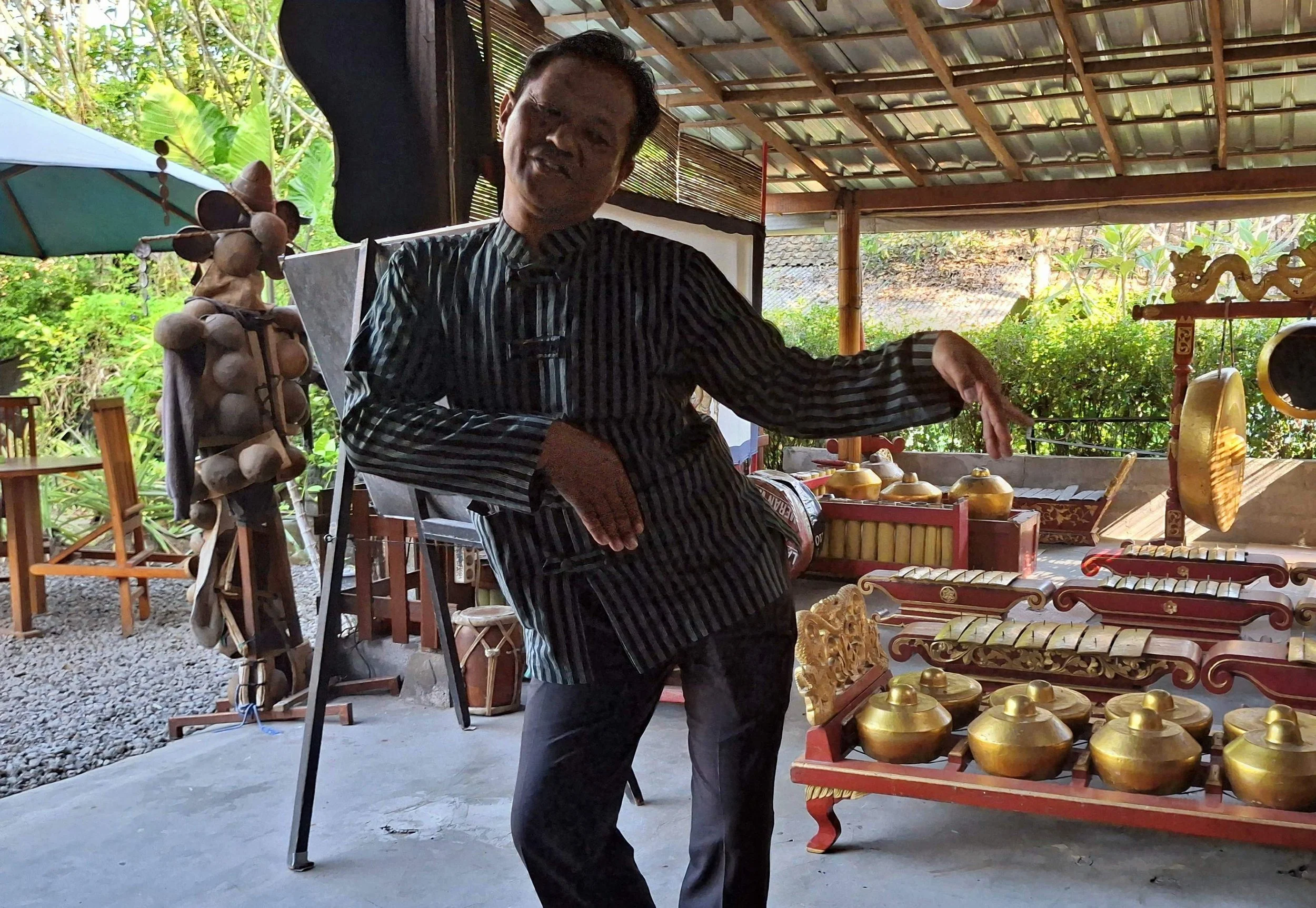
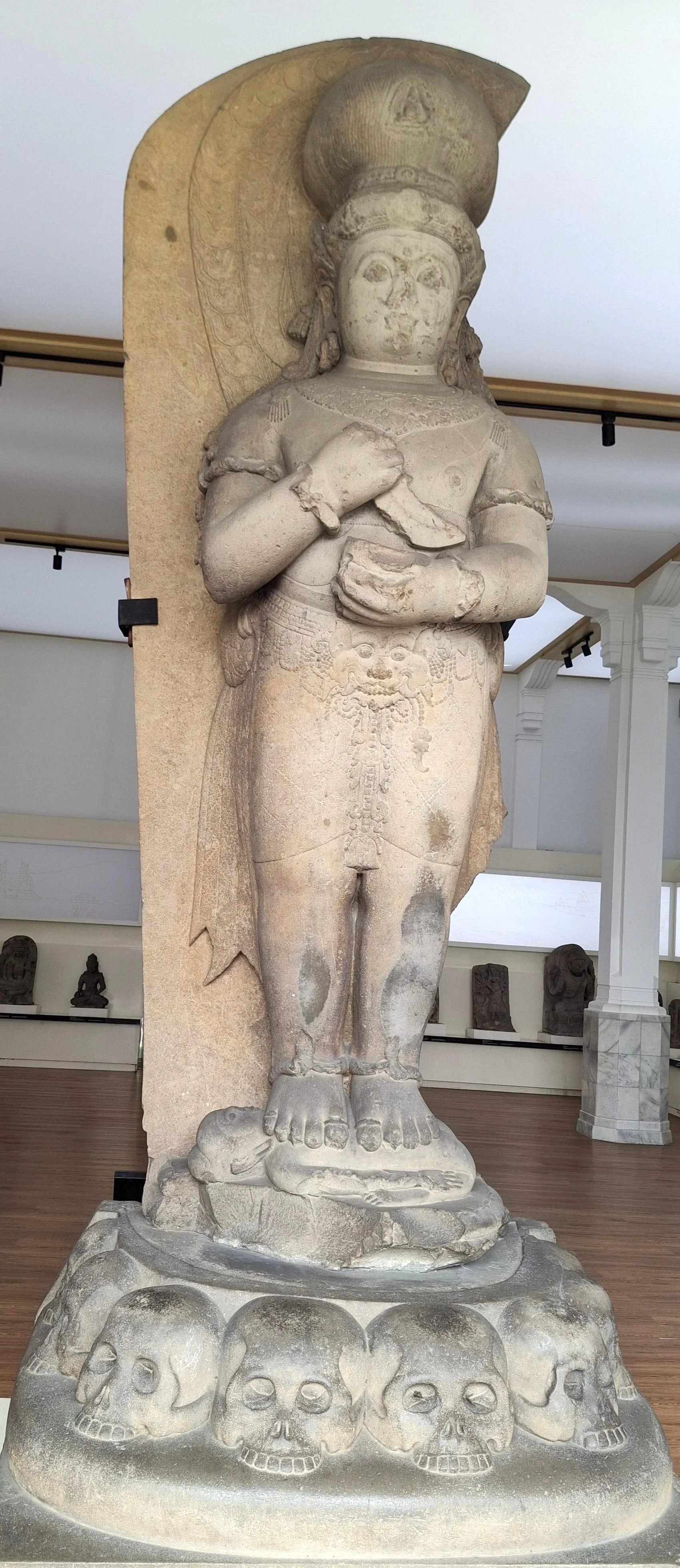
In precolonial Java, a fusion of Hinduism and Buddhism gave rise to what is called the syncretic Śiva-Buddha cult (Agama Siwa Buddha). Recent scholarship, however, shows that this label of “syncretism” oversimplifies the story (Arci 2017). From the Majapahit period onward, the relationship between Buddhism and Śaivism was less about merging beliefs than about sharing rituals and cooperating in practice.
Photo 2
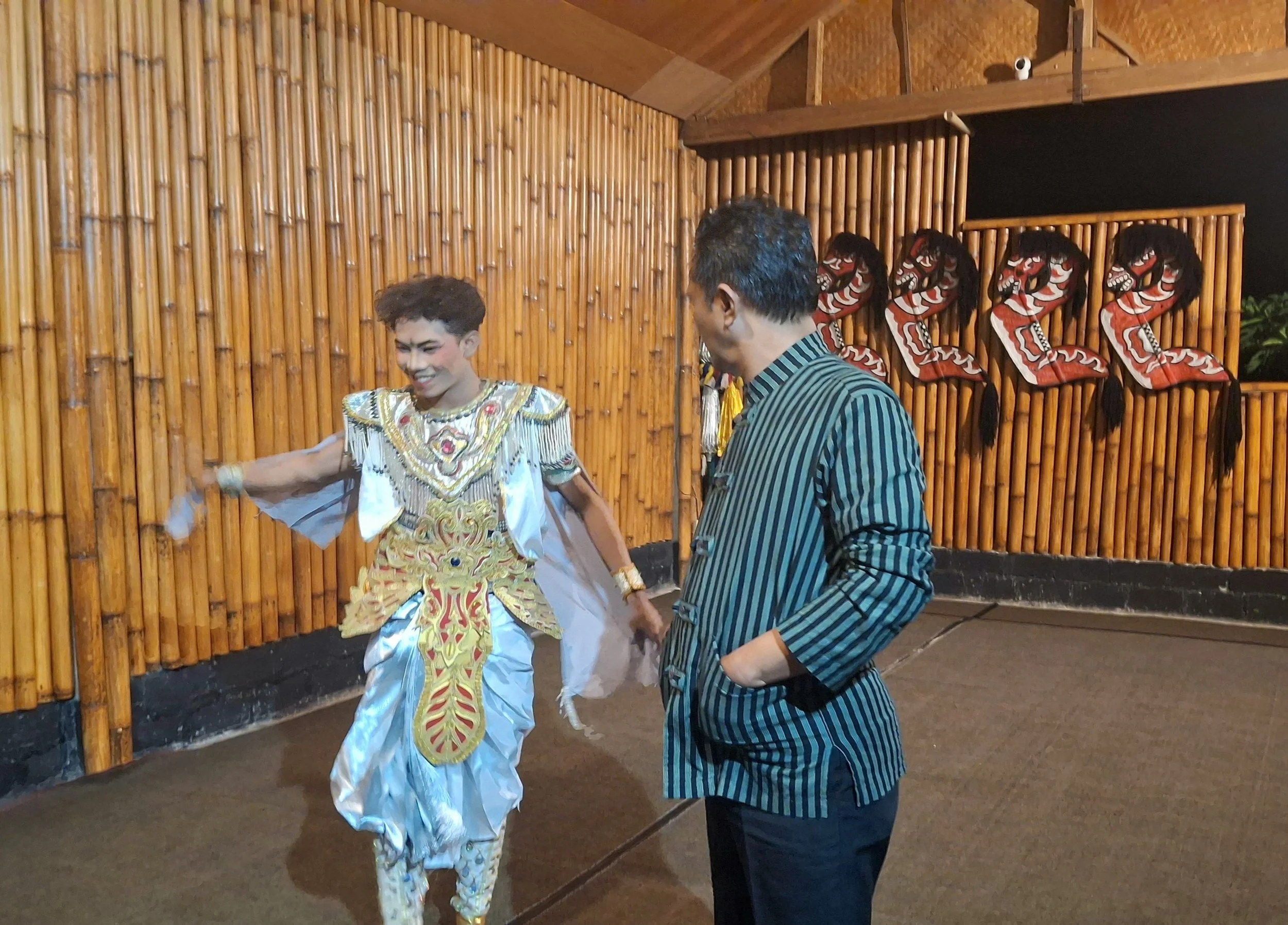
Religious pluralism in contemporary Indonesia is marked by the coexistence of multiple faiths within a national framework that officially recognizes six world religions under the state ideology of Pancasila, which affirms belief in one supreme God (Ketuhanan Yang Maha Esa). Within this pluralistic landscape, the Śiva-Buddha tradition holds a unique historical and cultural significance. While it no longer exists as an organized or actively practiced faith, it continues to serve as a potent symbol of pre-Islamic religious harmony, recalling an era when Hindu and Buddhist traditions intertwined and flourished together in Java and Bali. Today, the Śiva-Buddha synthesis is frequently highlighted in discussions of cultural heritage, artistic expression, and temple rituals—especially in Bali—serving as a lasting emblem of Indonesia’s capacity for religious accommodation and syncretism.
Pluralists like Widyo cite the Śiva-Buddha fusion as Java’s historical model of pluralism and draw inspiration from it. “On my identity card I am a Christian,” he said. “But I am more inclined to spirituality and open to various spiritual traditions.”
In 2017, during protests over Myanmar’s Rohingya crisis, Widyo recalled, local Muslims guarded a nearby Buddhist monastery in Mojokerto from Islamic radicals. Religious pluralism in Java, he believes, endures through these localized acts of mutual care among communities, rather than through universalizing theological debates.
Practical pluralism runs deep in Javanese ritual life, and the slametan—a communal feast held to mark life events or ward off misfortune—brings it vividly to life. At these gatherings, Islamic prayers are recited alongside offerings and symbols drawn from older Javanese traditions, creating a layered, hybrid ritual. Remarkably, both Muslims and non-Muslims participate: the event is less about strict religious identity than about social belonging, shared respect, and community cohesion. Clifford Geertz famously described such events as “the choreography of coexistence”: carefully orchestrated performances in which diverse spiritual and cultural currents flow together, reinforcing bonds and a shared sense of identity without demanding uniformity.
In Banyuwangi, the easternmost town of Java, we met Pak Ahmad, a wiry mystic with a constant clove cigarette and an easy grin. Over black coffee on his verandah, he spoke of Alas Purwo, the forest at Java’s eastern tip that holds a key place in Javanese mysticism known as Kejawèn. “To know truth, one must go to Alas Purwo,” he said. For him, the forest is a threshold between seen and unseen worlds.
Ahmad is a Muslim who often quotes the great Sufi Ibn ʿArabi. “Everything has a hidden meaning,” he told us. “Even the body is a book.” Between puffs of smoke, he added, “My son studies at a pesantren [Islamic boarding school]. He will go to Morocco to learn more about Islam.” For Ahmad, Islam and Javanese mysticism—Kejawèn—despite their seemingly incompatible beliefs, are not opposites but mutually compatible. He can be both at once. This is practical religion, quite different from textbook Islam.
In central Java, near Borobudur, we met Eko Sunyoto, a choreographer and wayang master (dalang). Born Muslim, into a family of wayang puppet masters, he draws from temple reliefs at Borobudur and Pawon among others to create performances like Kinnari-Kinnari and Sutasoma. “When I play Śiva,” he said, “I feel unity with Śiva. It’s the same unity Ibn ʿArabi spoke of—the Unity of Being.” This is regardless of whether or not theologians would find any commonalities between Śaivite monism and Sufi thought. His art transforms dance forms from Hindu epics and Buddhist jatakas sculpted in centuries-old stone into movement, showing how in Java, orthodox world religions do not hinder creative expression.
Photo 3
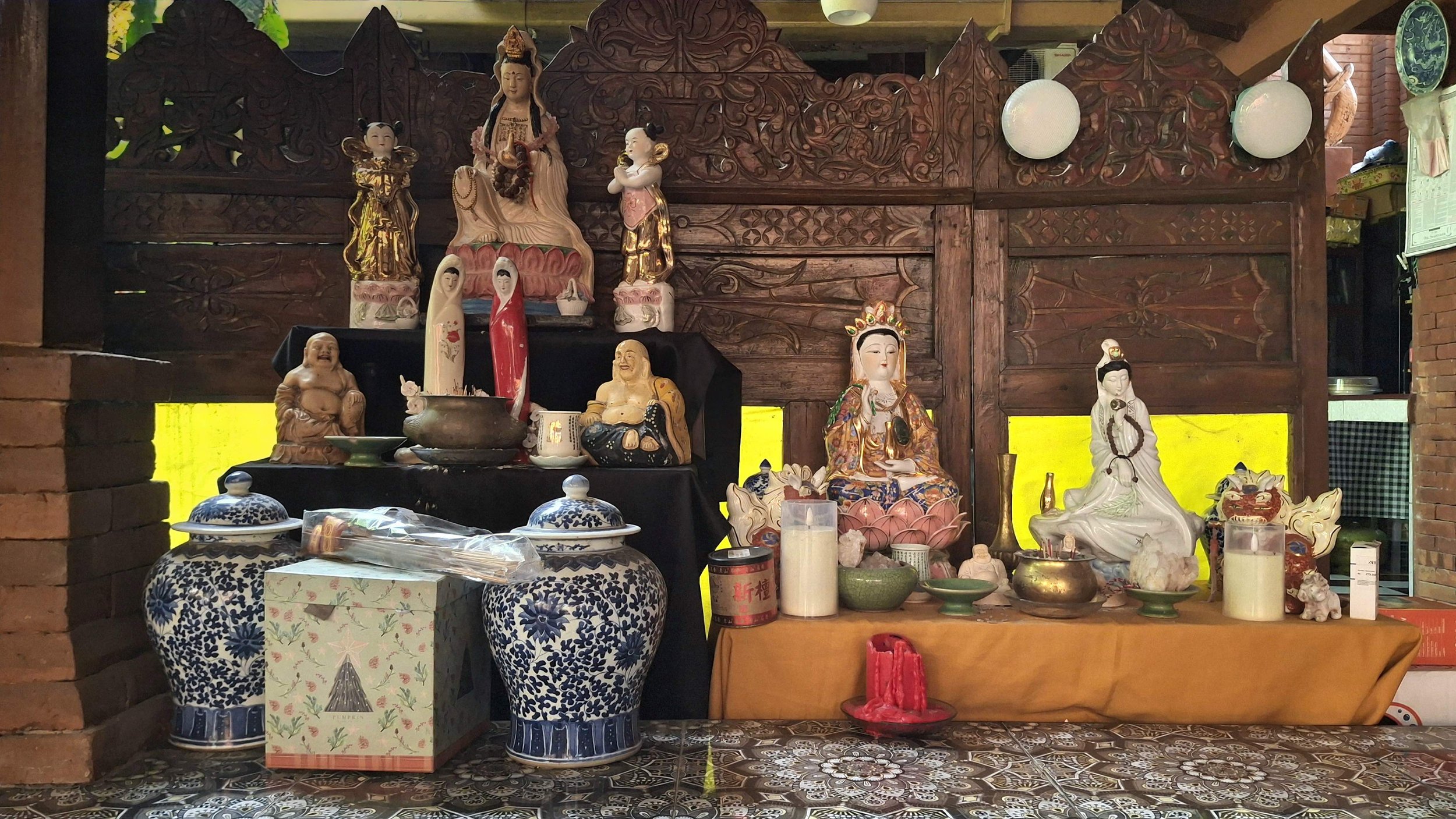
Photo 4
Anthropologist Andrew Beatty (2008) observed that most Javanese Muslims pray, fast, and attend mosque, yet interpret Islam through a Javanese lens—valuing balance and moral feeling over orthodoxy. As one temple guard at Candi Rimbi, an ancient Javanese Hindu temple, put it: “I pray to Allah five times a day, but protecting this temple is also worship.”
Such fluidity may seem paradoxical, but in Java it is a way of being. Pluralism here is not just tolerance—it is coexistence through ritual, obligation, and a quiet recognition that everyone’s truth carries local colour. It is what Pedersen (2016) calls “negotiated and fragile pluralism,” maintained through constant micro-decisions: who to invite, which rituals to join, what symbols to display, how to speak across, and how to live with difference.
But pluralism’s fragility becomes evident in the realm of policy. Since independence, Indonesia has recognized six official religions (agama), pushing countless indigenous traditions into the category of aliran kepercayaan—“streams of belief” (Gillespie 2007; Syafruddin et al. 2018). Under Suharto’s New Order, millions were urged to register as Muslim or Christian to fit the state’s model of modern faith (Hefner 1993, 2011; Maarif 2017). In 2005, the Council of Indonesian Ulama (MUI) issued a fatwa declaring “secularism, liberalism, and pluralism” un-Islamic. These pressures institutionalized religion but narrowed its imagination.
Political scientists Marcus Mietzner and Burhanuddin Muhtadi (2023) find rising intolerance but continued majority rejection of an Islamic state. The ethos of Pancasila—Indonesia’s ideology of unity in diversity—still resonates, not through slogans but through practice. Everyday acts like those of Widyo, Ahmad, or Sunyoto quietly reaffirm it: a Muslim protecting a Buddhist shrine, a Catholic honouring Guanyin, a Muslim dancer merging with Śiva.
In Java, religion is less a creed than a conversation—between faiths, humans and places. The Catholic lecturer’s hybrid altar, the Muslim mystic’s forest theology, and the dancer’s embodied cosmology all show that pluralism survives through creativity, empathy, and mutual recognition. It is not the absence of difference but the continual managing of it.
Bibliography
Beatty, A. (2008). Varieties of Javanese religion: An ethnographic account. Honolulu: University of Hawai‘i Press.
Geertz, C. (1960). The religion of Java. Chicago: University of Chicago Press.
Gillespie, J. (2007). The transformation of Indonesian religion: State, society, and the politics of faith. London: Routledge.
Hefner, R. W. (1993). Civil Islam: Muslims and democratization in Indonesia. Princeton, NJ: Princeton University Press.
Hefner, R. W. (2011). Shari’a politics and democratization in Indonesia. Cambridge: Cambridge University Press.
Maarif, A. (2017). Islam and Indonesian society: Navigating pluralism. Jakarta: LP3ES.
Mietzner, M., & Muhtadi, B. (2023). Indonesia’s political Islam: Trends and challenges. Singapore: ISEAS–Yusof Ishak Institute.
Nuraniyah, N. (2024, October). Indonesia’s political landscape under Prabowo Subianto. Jakarta Post.
Pedersen, L. (2016). Religious pluralism in Indonesia. The Asia Pacific Journal of Anthropology, 17(5), 387–398. https://doi.org/10.1080/14442213.2016.1218534
Syafruddin, S., et al. (2018). Aliran kepercayaan and the state: Religion and identity in Indonesia. Yogyakarta: Gadjah Mada University Press.
Bikash K. Bhattacharya is a graduate student in the Faculty of Asian and Middle Eastern Studies (AMES) at the University of Oxford, the UK.
Soe Sandar Win is an undergraduate student of Education and Pedagogy at Sompoerna University, Jakarta, Indonesia.
To cite this essay, please use the bibliographic entry suggested below:
Bikash K. Bhattacharya and Soe Sandar Win, “Everyday Pluralism and Practical Religion in Java,” criticalasianstudies.org Commentary Board, March 6, 2026; https://doi.org/10.52698/VIGQ7394.