
Notes from the Field | Khushi Rathore and Akshaya Kumar, Near-Zero Resistance: Indigeneity and Corporate Territorialization in the Steel City of India
Movies and (M)Art
I arrived in Jamshedpur, often called the Steel City of India, in 2025 to attend the ninth edition of Samuday Ke Saath (SKS), an Indigenous short film festival organized by the Tata Steel Foundation. The city is not only synonymous with the Tatas’ outsized influence on the region (as evident in its informal name, Tatanagar), but its geography has been shaped by the long entanglement between industrial expansion and tribal political consciousness. Indigenous films in Eastern India are not merely aesthetic artifacts but constitute a minor counter-archive documenting mining-led displacement, the survival of customary practices, and the everyday negotiation of indigeneity within a postcolonial state. Largely excluded from commercial theatres and digital circuits, these films circulate through workshops, community screenings, and film festivals—sites that function as the principal infrastructures through which Indigenous histories become publicly intelligible. SKS is vital since it is marked by a corporate institutional gateway to curate the political economy of representation for indigenous histories and culture.
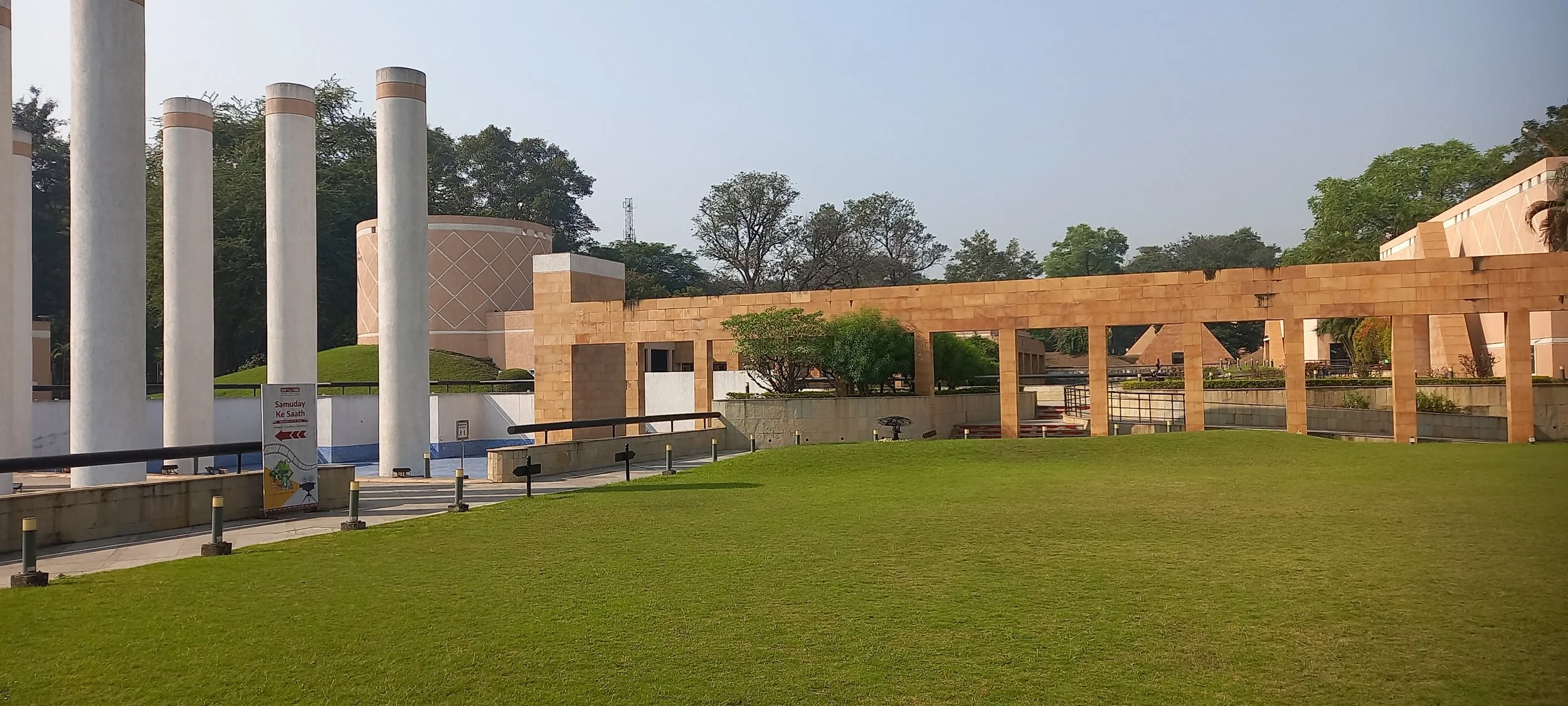
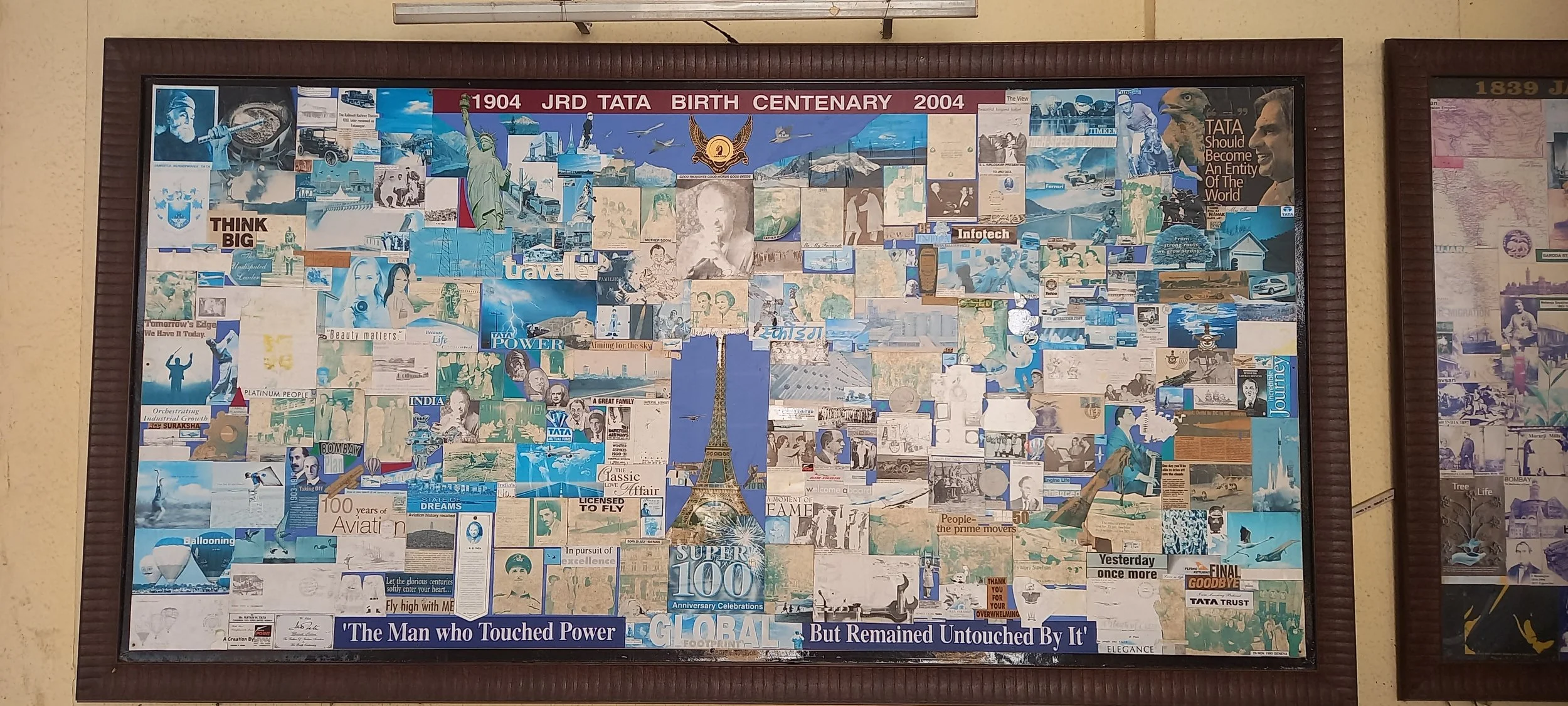
The festival took place in mid-November at the Russi Mody Centre for Excellence (CFE), a meticulously designed corporate archive dedicated to documenting the technocratic leadership of the Tata Group[1]. The Centre did not betray any signs of tribal identity or solidarity. Its architecturally opulent complex was marked by Tata’s corporate majesty and its founder’s glorious, storied life, especially with respect to the company’s contributions in building modern India. Its minimalist interiors and the founder’s gallery thus situate the visitors within a genealogy of Tata’s largesse. The organizational discipline marked by orderly standees and volunteers also conveyed the managerial ethic and corporate polish of the Tatas, which starkly distinguished the event from other Indigenous film festivals of India[2]. As I shall explain below, the festival was not merely a celebration of cultural diversity, but a moment of curated and orderly inversion within strictly maintained boundaries.

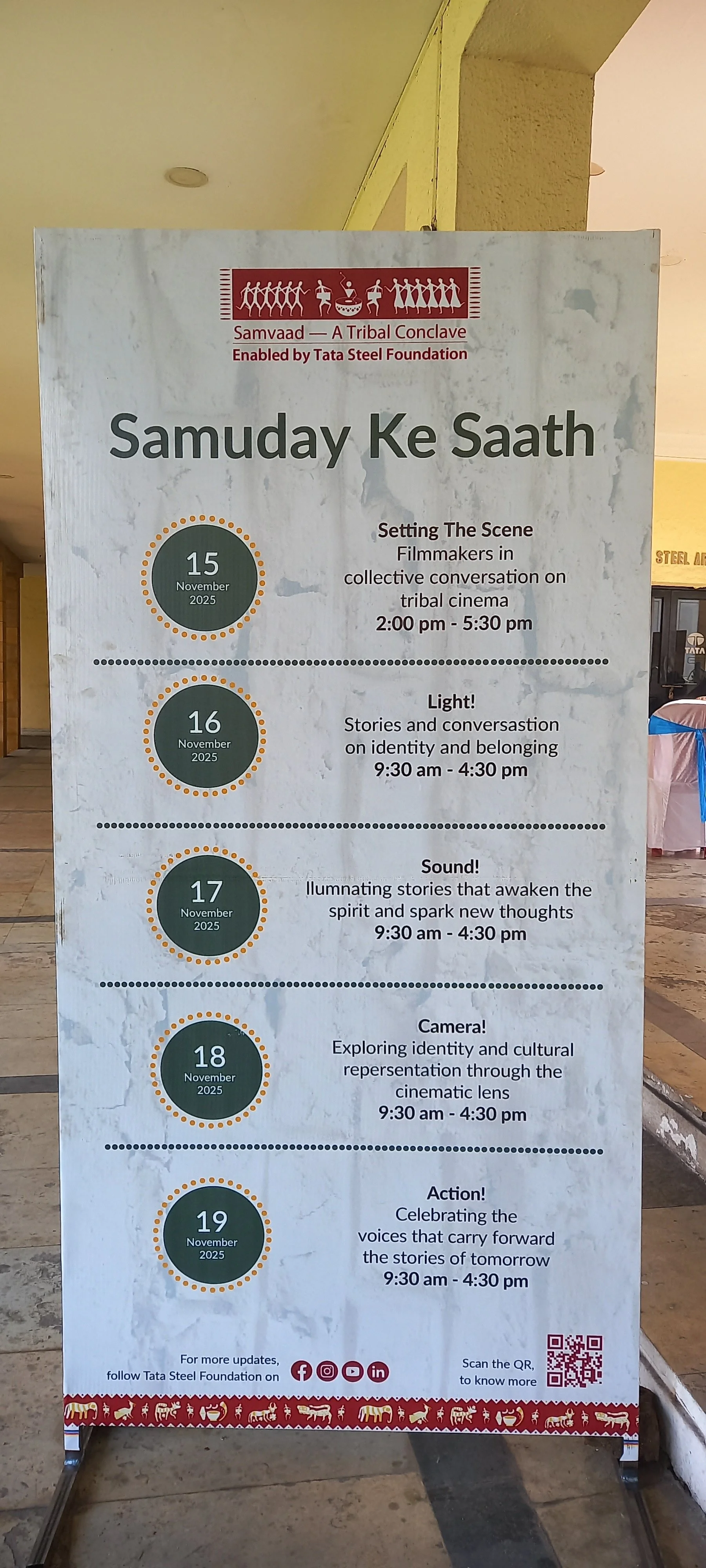
Throughout the festival, SKS exhibited a high degree of organizational foresight through conceptual planning and efficient execution. Each day, the festival began with a masterclass, framed as an occasion of reflection and professional instruction. The speakers addressed the audience in the idiom of craft, innovation, and industry readiness, and the audience responded with disciplined attentiveness. There was little murmur or informal sociality that one associates with public film festivals; instead, bodies remained largely still, eyes fixed on the speaker, notebooks and mobile phones mobilized for documentation. The composition of the audience itself was revealing, with approximately 70% comprising filmmakers or individuals professionally associated with cinema, 20% consisting of festival staff and volunteers, and the remainder made up of researchers and jury members. The absence of casual visitors suggests that the event was not a public film festival in the conventional sense but rather a professional enclave of cultural production. Each day was organized around a technical theme—Setting the Scene, Light, Sound, Camera, Action (Image 4). Cinema was not allowed to wander into the unruly domains of political affect; it was disciplined into a sequence of competencies, as though the festival was a training ground for cultural labor.
Once the masterclass concluded, the lights dimmed, and the film screenings began. The opening film on the first day was Raj Mohan Soren’s Hende Sona, a documentary tracing the story of a tribal family displaced by open-cast coal mining in Jharkhand. Moving between abandoned fields, compensation offices, and the slow collapse of intergenerational land ties, the film foregrounded mining as an economic threat to indigenous communities. Similarly, Tapu Rajee, a documentary by Biju Toppo, excavated the little-known history of displacement by tracing how, in 1918, four hundred indigenous people from Jharkhand were transported as indentured laborers to the Andaman and Nicobar Islands. Interweaving archival memory with present-day testimonies of the Ranchi Wala (Jharkhandi migrants who built the islands’ infrastructure), the film mapped a century of ongoing struggle for recognition. In contrast, Paise Daire, a short fiction by Ramesh Hembram, follows a farmer in Baripada who receives compensation after a canal submerges his land. The sudden monetization of loss leads to alcohol addiction, familial collapse, and death, exposing how development reframes dispossession as individual failure. Yet across these screenings, the dominant mode of reception remained strikingly uniform. Filmmakers were congratulated for “bringing Indigenous stories to national platforms,” and questions were asked about the craft, visual composition, and “professional standards.” What did not surface—either in open debate or in informal conversations—was the structural continuity between the histories narrated on screen and the industrial regime through which Jamshedpur itself was built. The discomfort was absorbed within the grammar of corporate cultural stewardship.
By late afternoon, as the final screenings concluded, the participants were gently ushered toward Gopal Maidan. SKS forms part of Samvaad, the annual Tribal Conclave at Gopal Maidan of Jamshedpur. Each day after the screenings, I followed this movement to observe the larger constellation of cultural activities that framed the conclave. The inauguration on the first day opened with the simultaneous beating of 401 Nagadas (a percussion drum). What followed then appeared as a sprawling cultural fair. Performances by individuals from Santal, Ho, Oraon, Khasi, Naga, Munda, Kuki, Garo, and other tribal communities on a central stage drew steady crowds. The periphery of the ground was lined with stalls of different pillars of Samvaad, including tribal handicrafts, cuisines, and healing practices. A total of 48 handicraft stalls displayed textiles, jewellery, pottery, home décor, and paintings; 17 stalls offered curated versions of tribal cuisines; and 33 stalls showcased healing practices drawn from ethnobotanical knowledge of 24 tribes.
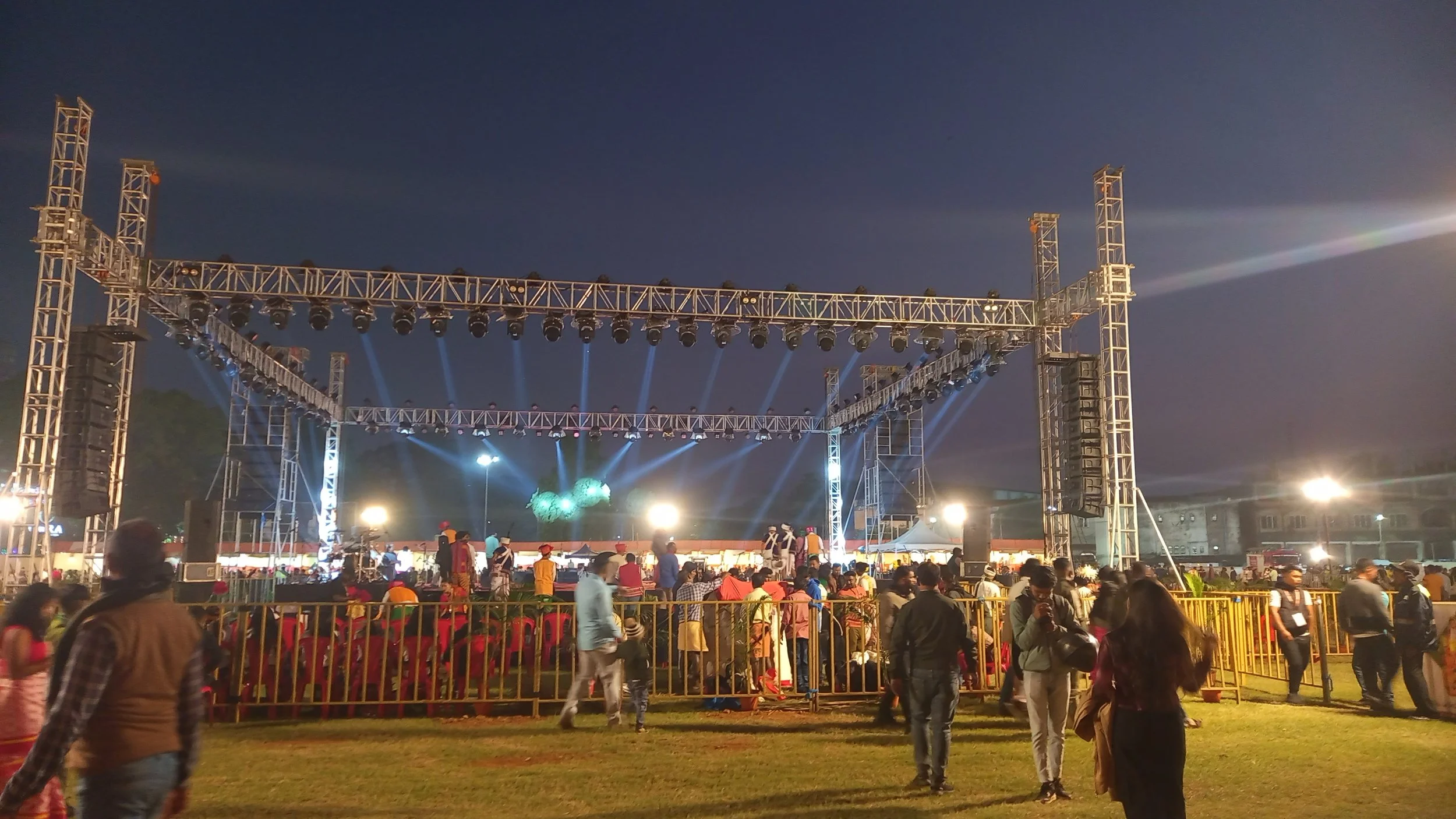
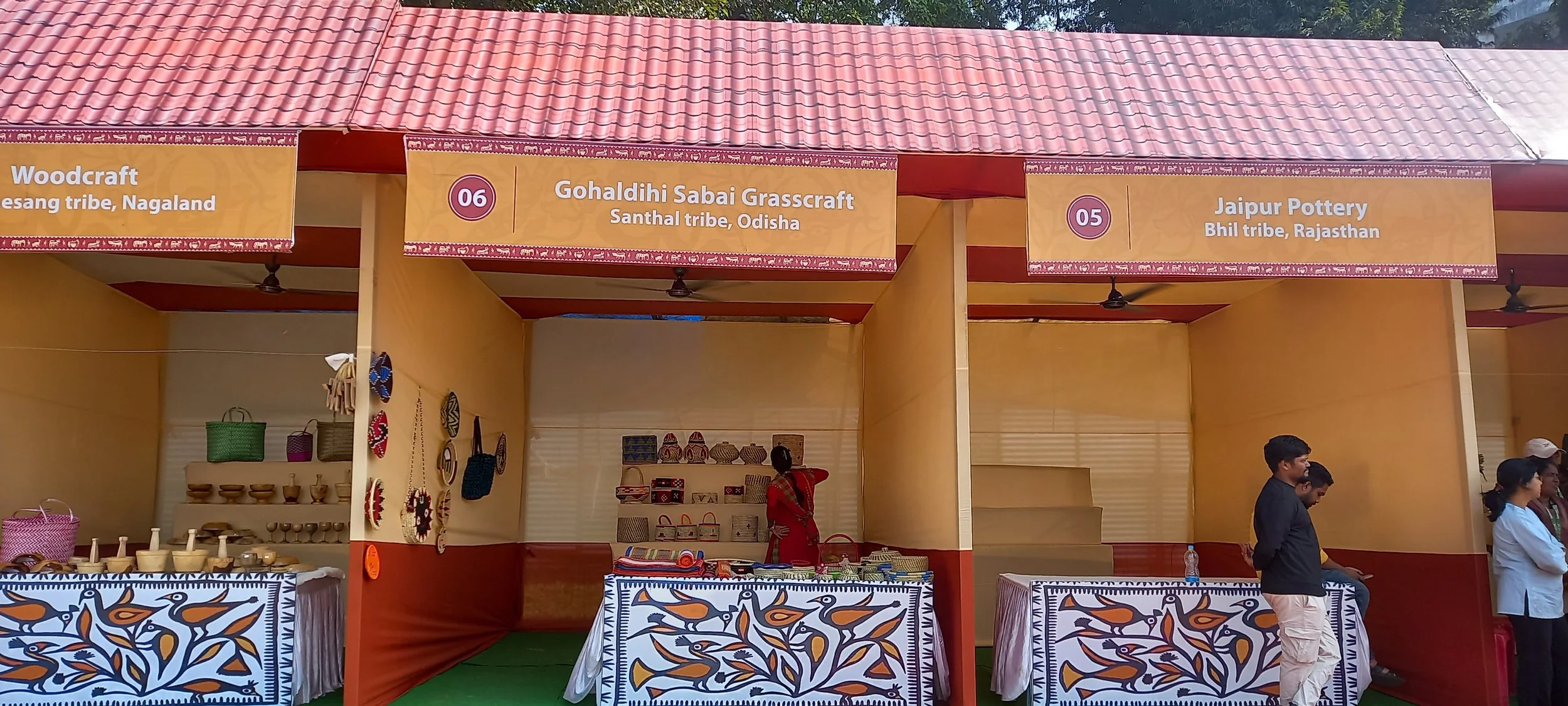
At Gopal Maidan too, what increasingly revealed itself was a carefully curated corporate-cultural infrastructure. The presence of security personnel wielding metal detectors at the entrance rendered the space akin to the control gate of a corporate symposium rather than a community-driven cultural gathering. Volunteers were moving briskly across the venue, hanging ID cards from their necks, and their practiced smiles bore an unmistakable timbre of institutional hospitality. The arrangement was marked by an unusual sophistication for events of this kind: Each stall bore a standardised nameplate listing the shop number, the tribe, and the state, rendered in the same style and typography. Large banners carrying the Tata logo and the various pillars of Samvaad framed the ground, constantly reminding visitors of the institutional architecture underwriting the event. The conclave, therefore, sought to domesticate the general unruliness of indigeneity within the corporate grammar of order and glitter.
Within this interstitial zone, my focus shifted from cultural production towards the infrastructural determinants of its circulation, which play a key role in determining which cultural commodities acquire value and why. Filmmakers may retain authorship and legal control over their works; yet they do not control the processes of meaning-making that take place at festivals or similar platforms that render layers of meaning to the works. This tension between media ownership and infrastructural control permeates the entire assemblage of Samvaad—tribal handicrafts, artifacts, cuisines, healing practices, and performances. While these cultural artifacts are produced and sustained by Indigenous communities, their circulation at such events is mediated through corporate infrastructures. Yet, what drives corporate power to control the conditions under which Indigenous culture circulates, and what benefits does this yield? To apprehend the rationale of this infrastructural governance, we need to trace Jamshedpur’s historical formation, exploring the entanglements between industrial consolidation and Indigenous presence in the city.
Corporate Territorialization and the Making of Jamshedpur
The conception of Jamshedpur as India’s first planned industrial city was envisioned by Jamshedji Nusserwanji Tata, a textile industrialist from western India. His vision of establishing Tata Iron and Steel Company (TISCO) was shaped by 19th-century techno-capitalist thought and extensive transnational encounters. Inspired by the steelmakers of Pittsburgh, assisted by American geologist Charles Page Perin and guided by P.N. Bose of the Geological Survey of India, Tata initiated an exhaustive search in 1904 for a site capable of sustaining large-scale metallurgical production. The search culminated in December 1907 with the selection of Sakchi, a village situated within the Chhota Nagpur Plateau (present-day Jharkhand). The region’s strategic viability lay in its spatial closeness to extractive resources: raw materials from Jharkhand and Orissa; and perennial water from the Subarnarekha and Kharkai rivers near Sakchi.
The Sakchi region was far from terra nullius. Although densely forested, it was inhabited by Ho, Munda, Santhal, and other tribal communities who sustained themselves through subsistence agriculture and forest-based livelihoods. The acquisition of 3,564 acres of land for the construction of the Tata Steel plant displaced tribal hamlets of Sakchi and surrounding villages, including Nutandi, Susnidih, and Jugsalai. Construction of the steel plant formally began in 1908, and the first steel ingot was rolled in 1912. During the First World War, TISCO supplied 1,500 miles of rail and 3,00,000 tonnes of steel for British military campaigns across Europe and East Africa. In 1919, therefore, Sakchi and its adjoining villages were collectively named Jamshedpur by the then Viceroy of India, Lord Chelmsford, while Kalimati railway station—central to the transport of raw materials—was rechristened Tatanagar Junction. Renaming thus operated as an act of corporate territorialization, which not only overwrote pre-existing spatial identities but also inscribed Tata’s industrial hegemony onto Indigenous lands.
Through corporate territorialization, Jamshedpur acquired the formal status of a city and established the structural conditions for subsequent demographic expansion and modern urban planning. Census records from 1911 and 1921 indicate that the region’s population expanded dramatically from 5,672 to 57,360, mainly due to migration from Bengal, Bihar, and Orissa. This rapid influx compelled the company to operationalise Jamshedji’s oft-cited blueprint for an industrial city grounded in welfare urbanism and characterized by well-ventilated houses, wide tree-lined avenues, parks and gardens, sports grounds, and provisions for religious plurality. The realisation of this vision fell to his son, Dorabji Tata, who translated it into spatial form through four successive phases of urban planning.
As elucidated in a critical scholarly investigation by Amita Sinha and Jatinder Singh, the four city plans introduced by Julian Kennedy and Axel Sahlin (1908), F.C. Temple (1919), P.G.W. Stokes (1937), and Otto Koenigsberger (1944) focused on the construction of bungalows for covenanted officers, housing quarters for skilled workers, and urban recreational centres; while construed pre-existing tribal settlements as moribund, substandard habitations, advocating their replacement. Comprising 71.14% of the unskilled laborers in the company, tribal employees were relegated to bustees at the periphery of the city, where infrastructure remained precarious. Sinha and Singh explained it as a troubling situation where Indigenous communities from the region, whose labor historically enabled—and continues to sustain—the steel plant, remain confined to impoverished bustees, as access to company housing is restricted to permanently employed workers meeting specific tenure requirements. Efforts to formally integrate bustees within planned urban frameworks have largely remained unrealised. Consequently, 86 bustees (1,800 acres of land) were excised from the leasehold regime and transferred back to the jurisdiction of the state government in 2005.
These spatial exclusions within the planned city were further intensified beyond Tata Steel’s immediate urban footprint through a wider regime of state-led infrastructural interventions. As documented in V. Upadhyay’s work, Hurlung, a village inhabited predominantly by Bhumij and Santhal households, experienced quotidian disturbances generated by the Subarnarekha Multipurpose Project. Among the most contested components of this project is the Chandil Dam, constructed to supply water for TISCO’s industrial operations and urban consumption in Jamshedpur. Its construction resulted in widespread displacement and resistance, culminating in a mass Adivasi protest in January 1979. Police firing during the protest resulted in the deaths of four tribal individuals. Subsequent legal adjudication, Tata Iron and Steel Company Ltd. v. State of Bihar (2004), exposed how corporate industrial imperatives are routinely privileged within regimes of resource governance. Today, with approximately 52 villages submerged annually during the monsoon, the Chandil Dam persists as a site of unresolved conflict. Additionally, mining activities undertaken to extract raw materials have caused widespread tribal dislocations. The industrial history of Jamshedpur, therefore, is inseparable from Indigenous struggles and resulting environmental transformations across eastern India.
Against this landscape of displacement, the city was reimagined as an ordered terrain of industrial promise. In pursuit of a cosmopolitan urban imaginary, Tata extended its infrastructural interventions through two distinct regimes of development: (1) large-scale civic infrastructure, and (2) memorial infrastructure. Concurrently, Tata pursued the horizontal expansion of its industrial portfolio in Jamshedpur through the establishment of Tata Power, Tata Engineering and Locomotive Company (TELCO), Tata Consulting Engineers, Tata Robins Fraser, Tata Consultancy Services, Tata Cummins, and many others. Independent entities in the city, such as The Tinplate Company of India and Indian Steel Wire Products, later merged with the Tata Group, while ancillary industrial support was provided by firms such as BOC Gases, Nuvoco Vistas, and Praxair. Together, these core and ancillary enterprises constituted a massive industrial ecology that overshadowed the demographic and cultural histories buried under the industrial ambitions of Jamshedpur.
Unsurprisingly, these ambitions gradually exceeded the natural boundaries of the Kharkai and Subarnarekha rivers, incorporating new territories and populations into its industrial orbit. During the 1960s, adjacent zones such as Gamharia and Adityapur were converted into industrial areas by the Bihar Government, and residential settlements proliferated in areas such as Mango and Adityapur. In response to this urban diffusion, the Jamshedpur Urban Agglomeration (JUA) 2027 Master Plan was formulated in 2008 by Superior Global Infrastructure, New Delhi, in collaboration with Wallace Roberts & Todd, Philadelphia. Encompassing an area of 149.23 square kilometres, the plan covered the urban core and peripheral settlements, including Jamshedpur, Tata Nagar Railway Colony, Adityapur, Chota Gamahria, Mango, Jugsalai, Bagbera, Gadhra, Chhota Gobindpur, Purihasa, Haludbani, Sarjamda, Ghorabandha, and Kapali. While the Master Plan purported to address infrastructural disparities between the planned corporate core and its rapidly urbanising periphery, a comparison of the region’s map from 1910 and the JUA 2027 plan reveals a steady decrease in green cover and tribal settlements in the region.
As the city’s largest quasi-landowner, the Tata Group exercises extensive territorial and symbolic authority, shaping not only urban space but also the terms under which Indigenous presence becomes visible. While Indigenous communities continue to inhabit the city’s margins and hinterlands, they are neither erased nor fully acknowledged; instead, they are aestheticised—appearing in corporate and official discourse as performers for Republic Day ceremonies, artisans at organized melas, and performers for curated cultural evenings. Samvaad, despite its scale and visibility, operates within a tightly managed framework of representation. This disjunction between the celebration of Indigenous culture and detachment from the histories of land acquisition, industrial expansion, and displacement demands explanation.
Near-Zero Resistance
Corporate Social Responsibility (CSR) is a legal framework in India through which business enterprises are mandated to account for, and partially mitigate, the social and environmental consequences of their economic activities. Under Section 135 of the Companies Act (2013), CSR is no longer a voluntary philanthropic gesture but a statutory obligation for companies that meet specified financial criteria. Firms with a net worth exceeding INR 5 billion, a turnover above INR 10 billion, or a net profit greater than INR 50 million in the preceding financial year are required to allocate at least 2% of their average net profits over the previous three years toward CSR activities. These activities must fall within a set of approved categories, including education, healthcare, rural development, environmental sustainability, and social welfare. Within this framework, the Tata Group’s CSR philosophy emphasises alignment with local, national, and global development priorities, particularly the Sustainable Development Goals (SDGs), and foregrounds disadvantaged communities as primary beneficiaries.
A central institutional vehicle for these initiatives is the Tata Steel Foundation (TSF), a subsidiary under the Tata Group. Operating across approximately 4500 gram panchayats in Jharkhand and Odisha, TSF claims to directly reach over 1.5 million individuals annually. Programs such as Samvaad and Johaar Haat[3] are positioned as flagship CSR interventions for tribal welfare, supported by substantial financial allocations. Of the total INR 513.9 Crore allocated for CSR programmes in 2025, the Board of Directors of the company approved INR 27.67 Crore specifically for tribal welfare initiatives. These allocations materialized as conspicuous on-ground expenditures, signaling a strategic stance of reputation management. Moreover, at Gopal Maidan, a dedicated media corner was established to host journalists, while press coverage foregrounded enumerative spectacle—invoking figures such as “153 tribes, 10 Particularly Vulnerable Tribal Groups (PVTG), representation from 26 states and Union Territories, and 2,500 participants.” These statistics were repeatedly coupled with the TSF CEO’s assertion that Samvaad “stands as a testament to the wisdom, resilience, and cultural richness of tribal communities.” Throughout the event, therefore, TSF appeared to curate a carefully sanitized Indigeneity, simultaneously mobilizing the spectacle to project its promotional corporate identification.
SKS and Samvaad thus functioned as a soft power dispositif: it foregrounded Indigenous artistry while relegating the dispossession that necessitated such compensatory gestures to the background. While the encounter between corporate industrial expansion and Indigenous dispossession should generate friction, any overt conflict or critique was conspicuous in its absence at the festival. Even politically charged films, such as Hende Sona and Tapu Rajee, were absorbed seamlessly into the event’s CSR apparatus. This corporate appropriation of conflict is best understood through the win–win arrangement enabled by SKS and Samvaad: Indigenous performers and filmmakers receive visibility, market access, and institutional recognition, while the corporation accumulates symbolic capital, reputational value, and regulatory legitimacy. Corporate capital and its access to powerbrokers in modern India have gradually chiselled such “frictionless” cultural pathways that facilitate smooth circulation of diversity and difference, without destabilizing the hegemonic constellations that continue to consolidate their infrastructural ground while curating artistic circulation upon it. In these spaces, corporate governance operates not via erasure but in controlled visibility. Indigeneity is not excluded—it is curated and sanitized into politically innocuous forms. Indigenous culture is thus deprived of its political force even as it circulates free-ly.
References
Sinha, Amita, and Jatindra Singh. 2011. “Jamshedpur: Planning an Ideal Steel City in India.” Journal of Planning History 10(4): 263–81. https://doi.org/10.1177/1538513211420367
Upadhyay, Vrajaindra. 1999. “Impact of Subarnarekha Multipurpose Project on three Singhbhum villages”. Social Change 29(3–4): 233–43. https://doi.org/10.1177/004908579902900415
Notes
[1] Founded in 1868 by Jamsetji Nusserwanji Tata, the Tata Group is India’s largest multinational conglomerate, headquartered in Mumbai. Under successive leaders—most notably Dorabji Tata, J. R. D. Tata, and Ratan Tata—the group diversified into steel, automobiles, information technology, energy, chemicals, telecommunications, defense, hospitality, and finance. Today, its 29 publicly listed companies together command a market capitalisation of approximately INR 37.84 trillion (US$ 446 billion). Evolving from a 19th century trading firm into a global corporate empire, the Tata Group mirrors the trajectory of Indian industrial capitalism itself.
[2] Other Indigenous film festivals organized in India are Baripada Indigenous Short Film Festival (Baripada, Orissa) organized by SAFDF (Santali Arts and Film Development Foundation) and Dharti Aaba Tribal Film Festival (Ranchi, Jharkhand), a state-sponsored event under the patronage of Union Ministry of Tribal Affairs in collaboration with the state government of Jharkhand State Government.
[3] Johaar Haat is a mart for tribal handicrafts, cuisines and artifacts.
Khushi Rathore, PhD Scholar, School of Humanities and Social Sciences, Indian Institute of Technology, Indore, India, email: phd2401161001@iiti.ac.in
Dr. Akshaya Kumar, Associate Professor, School of Humanities and Social Sciences, Indian Institute of Technology, Indore, India, email: akshaya.kumar@iiti.ac.in
To cite this essay, please use the bibliographic entry suggested below:
Khushi Rathore and Akshaya Kumar, “Near-Zero Resistance: Indigeneity and Corporate Territorialization in the Steel City of India,” criticalasianstudies.org Commentary Board, April 7, 2026; https://doi.org/10.52698/GUTV1401.