
Notes From the Field | Chonglong Gu, Capturing mundane everyday grass-roots multilingualism in Yiwu, China
China has traditionally been seen as a relatively homogenous country. For extended periods of time, China pursued a path of being self-sufficient and was relatively closed for foreign business and trade (e.g. during parts of the Qing dynasty and years after the founding of ‘new’ China in 1949). During the Qing dynasty, Canton for instance was the only port in China that was officially allowed to conduct business and trade with the rest of the world. However, in recent decades, the overriding forces of globalization have brought foreigners to the nation, effecting change to the nation’s linguistic and semiotic landscape and urban ecology and dynamic in general. Drawing on photographic evidence, this essay highlights and visualizes the transformative power of business and trade in shaping the face of an otherwise homogeneous Chinese city in the context of ‘low-end’ globalization (cf. Mathews 2011).
Notably, Guangzhou and Yiwu have established themselves as prominent centers of trade and commerce (Gu 2024a; 2025), particularly serving as regional and global hubs of ‘low-end’ globalization (Mathews 2011). More specifically, Yiwu, which is a county-level city in Eastern China, has over the years attracted entrepreneurs, businessmen, and traders from the Middle East, Africa, South Asia, and beyond. Known as the world’s capital of small commodities, Yiwu is essentially a business and trade-forged city, from which a wide range of everyday goods and products—such as electronics, household appliances, souvenirs, fake flowers, shoes, baseball caps, socks, shirts, sex toys, phone cases, zippers, glasses, pillows, carpets—are traded and exported worldwide. Despite its humble beginnings, the city of Yiwu has put itself on the map in recent years, due to its increasingly important role in the process of low-end globalization. Yiwu’s recent rise to global prominence has also benefited from China’s reform and opening-up policies initiated by Deng Xiaoping in the late 1970s.
Yiwu is in many ways a bridge and intercultural connecting point, linking China and the rest of the world. Yiwu’s position is becoming even more resonant and pronounced in a context of China’s ‘Belt and Road’ initiative. In more recent years, Yiwu has seen its fair share of ups and downs in our constantly changing world. For example, the once-in-a-lifetime Covid-19 pandemic impacted many small businesses in Yiwu due to travel restrictions and other lockdown measures. Also, Yiwu is inevitably affected by the changing diplomatic and geopolitical situations globally. Notably, in the context of China-US trade wars, many businesses are adversely affected. But overall, in many ways, Yiwu is a major gateway to China, and features great linguistic and cultural diversity rarely seen in the rest of China.
Globalization has many aspects, dimensions, and manifestations. As recognized by Appadurai (1990), globalization can result in change in ethnoscapes (e.g. the flow of people), technoscapes (e.g. flow and configurations of technology), financescapes (e.g. the flow of money and global business networks), mediascapes (e.g. the flow of cultural industry networks) and ideoscapes (e.g. the flow of ideas, images, and their nexuses). Clearly, several such aspects are manifested saliently in Yiwu. However, globalization—or more specifically low-end globalization—in Yiwu also has its unique features. While some traders and businessmen from developed countries in the Global North are present in Yiwu, the vast majority come from developing nations in the so-called Global South. These include countries in Africa (such as Ethiopia, Guinea, Cameroon, Mali, Niger, Egypt, Algeria, Libya, Morocco, Tunisia, Somalia, and Sudan), countries in South Asia (such as India, Nepal, Bangladesh and Pakistan), countries in the Arab world (such as Jordan, Iraq, Syria, Saudi Arabia, Palestine), Southeast Asia (e.g. Malaysia and Indonesia), and also Central Asia (Afghanistan, Kazakhstan, Uzbekistan). There are also traders and businessmen from Russia and South Korea. Clearly, many/most of these traders in Yiwu originate from countries along the historic Silk Road. Given that many of these foreign traders and businessmen are Muslim, Yiwu features numerous halal restaurants and other ethnic businesses in different neighborhoods (Figures 1-4). The influx of international traders fosters dynamic South-South population flows at an unprecedented scale. Such South-South dynamic (cf. Gu 2025; Muniandy 2015) represents an important and unique feature of Yiwu’s urban landscape.
Worldwide, the movement of people has resulted in multilingualism and multiculturalism for various reasons, both historically and in a context of globalization. This may give rise to ethnic areas and/or ethnic enclaves (Cohen and Neal 2012; Gu 2024a; Gu 2026; Muniandy 2015). For instance, for historical reasons, Indians were brought to British Malaya, Hong Kong, East Africa, South Africa, Fiji etc., as soldiers, policemen, indentured workers, laborers and construction workers by the British as part of the British empire. Also, employment is also a major driver of migration. For instance, many South Asians and Southeast Asians choose to pursue employment (Piller 2018) in the economically more prosperous Gulf countries (e.g. the UAE, Qatar, Oman, Saudi Arabia). Similarly, domestic helpers and foreign workers from the Philippines, Thailand and Indonesia are reshaping places such as Hong Kong, Taipei and Singapore’s urban landscapes. Tourism is also a major force that has transformed countries in the world. For instance, tourist enclaves can be found in places such as Bali Island in Indonesia, Thailand and Nepal. Pockets of Bali can be seen as ‘Little Australia’. Similarly, due to the arrival of foreign tourists, Thamel has established itself as a prominent tourist enclave in Nepal’s capital Kathmandu. More specifically, within Thamel, certain specific areas cater to European/North American tourists and certain areas cater to Jewish, Korean and Chinese tourists (Gu 2024b). In Pattaya, due to mass tourism, certain areas have become Arab and Indian enclaves, where ethnic businesses are thriving. Similarly, a middle eastern tourist enclave ‘Soi Arab’ (Cohen and Neal 2012) exists in Central Bangkok close to Nana station. More recently, the mass migration of legal and illegal migrants is also fundamentally changing the face of many countries in Europe (Santos Rovira 2025) on socio-political, cultural, linguistic and religious levels.
In comparison, the diversity in Yiwu is almost exclusively triggered by trade and business. Foreign businessmen and traders in Yiwu tend to speak a variety of different languages, including Arabic, English, French, Spanish, Persian, Kurdish, Turkish, Hindi, Urdu, Punjabi, Bengali, Nepali, Uzbek, Bahasa Indonesia, Russian, and Korean. The city’s linguistic landscape is dotted with signs in many of these languages (cf. Figures 1-4), reflecting its ‘superdiversity’—a term used by Vertovec (2007) to describe highly diverse urban populations in our globalized world. In particular, languages like English and Arabic are particularly visible, which in many ways represent the ‘language’ of low-end globalization (Gu 2025) in Yiwu. Figure 1 and Figure 2 illustrate the pervasive nature of Arabic in many parts of the city. These languages act as important lingua francas for business, commercial and communicative purposes, which possess great linguistic capital. Figure 1 shows one officially made top-down sign informing Arabic-speaking visitors that ‘Internet hookup’ is ‘all fraud’. A few banks and public-facing units also have signs in Arabic.
Clearly, given the nature of foreigners’ existence, there is often a sense of temporariness. Foreign traders tend to come and go. That is, after completing their business, many leave and then many more will come on an ongoing basis. Despite such temporariness, their existence has fundamentally transformed the face of the otherwise homogeneous city. Certain neighborhoods have evolved into ‘Little Arabia,’ ‘Little Africa,’ and ‘Little India’ enclaves, featuring a wide range of hotels, shops, stores, bars, and restaurants that cater to their variegated cultural, religious, and social needs. For example, Chouzhou North Road and its surrounding areas are often referred to as the city’s ‘Little Arabia,’ ‘Little Middle East,’ or ‘Little Africa.’ Arabic language is especially prominent in these areas (Figure 1 and Figure 2). One stretch of Chengbei Road can be seen as the city’s ‘Little India’ or ‘Little South Asia’, with many South Asian oriented businesses (Figure 3). In other pockets of Yiwu, there is a concentration of businesses targeting Russians, Belarussians and people from Caucasian and former Soviet countries (e.g. Kazakhstan, Uzbekistan, Turkmenistan, Kyrgyzstan and Azerbaijan). This is illustrated in Figure 4. These foreign-language signs and various religious and cultural symbols (e.g. the Islamic sign ‘halal’ and the Hindu religious signs/mantras ‘Om Namah Shivaya’ and ‘Har Har Mahadev’) add an exotic flavor to Yiwu’s city landscape, contributing to the city’s constantly evolving and layered urban palimpsest.
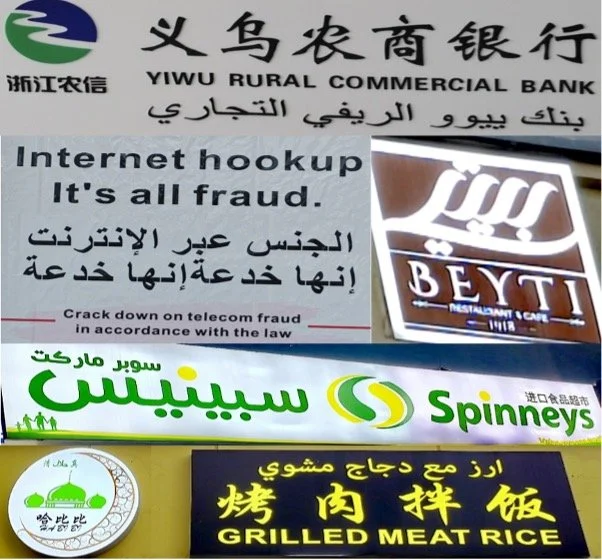
Figure 1: signs featuring Arabic found in and around Chouzhou North Road.
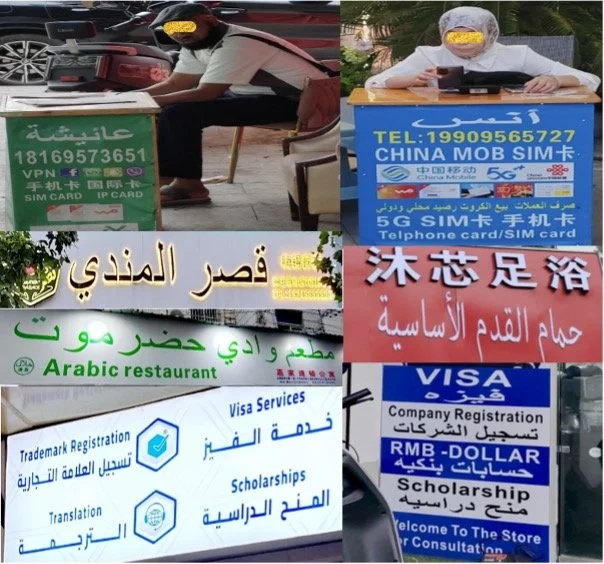
Figure 2: signs featuring Arabic found in and around Chouzhou North Road.
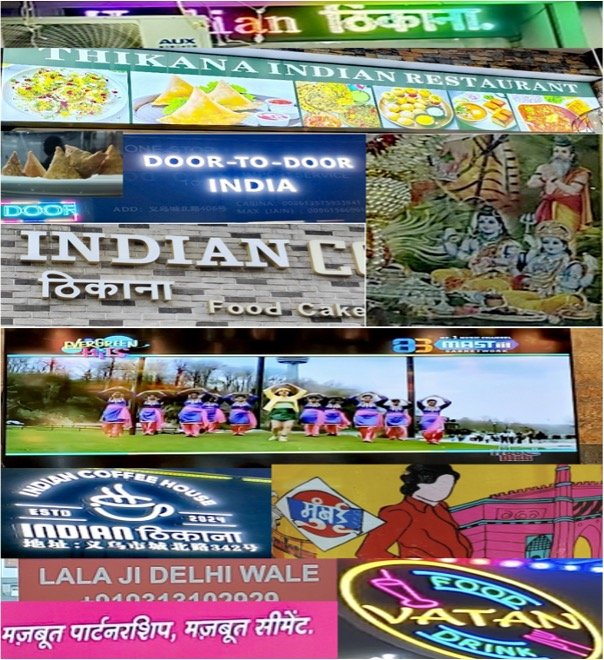
Figure 3: Hindi and other South Asian elements in the linguistic and semiotic landscape.
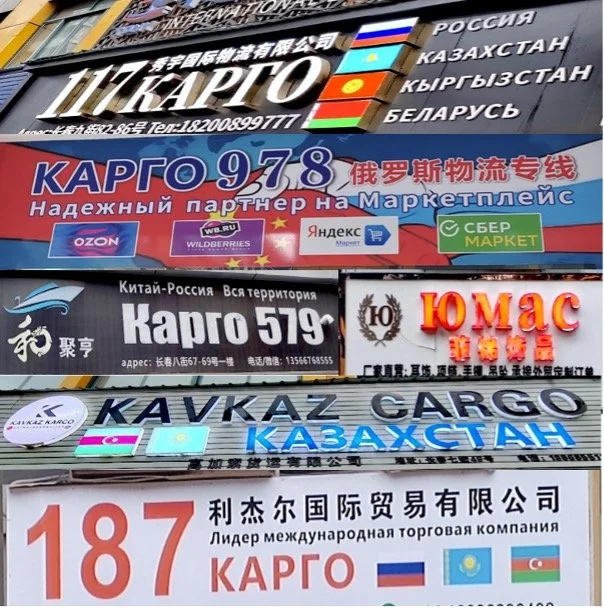
Figure 4: signs related to businesses oriented towards Russia, Belarus and former Soviet countries (e.g. Kazakhstan and Kyrgyzstan)
Yiwu’s multicultural fabric, composed of people from varied cultural, linguistic, and religious backgrounds, creates a vibrant atmosphere of urban conviviality (Piller 2018). In many ways, Yiwu can be seen as a space of liminality, which is not completely Chinese and not completely foreign. Many areas of Yiwu exemplify fascinating instances of language contact, where people from different backgrounds interact for commercial and other communicative purposes. During the day, trading malls serve as the city’s commercial hubs, where intense intercultural contact takes place. At night, areas like Chouzhou North Road and Santing Road come alive with roadside stalls set up, which are operated by Chinese small business owners. They sell fruits, food, perfumes, dates, shoes, clothes, electronics, pets, and more to international visitors from South Asia, the Middle East, North Africa, Central Asia, and beyond. The actions usually last until the wee hours of the morning. These contribute to a ‘street-stall economy’ (地摊经济), which is highly important in Yiwu (cf. Figure 5). In such an economic mode, individual stall owners often creatively advertise their products in a variety of languages (e.g. English and Arabic). Figure 6 shows some of these small and moveable grass-roots multilingual signs.
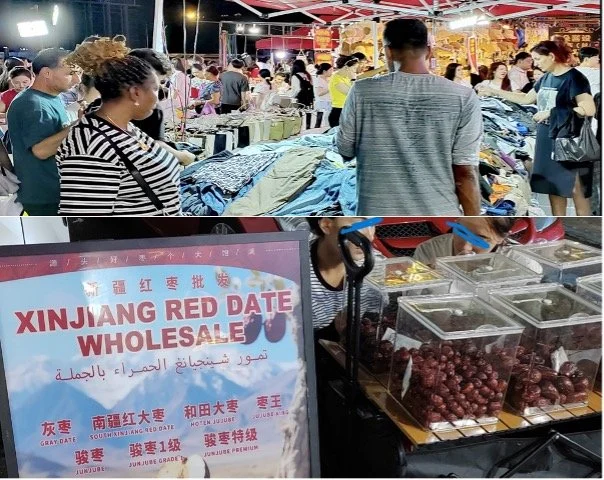
Figure 5: street-stall economy/night economy in Yiwu.
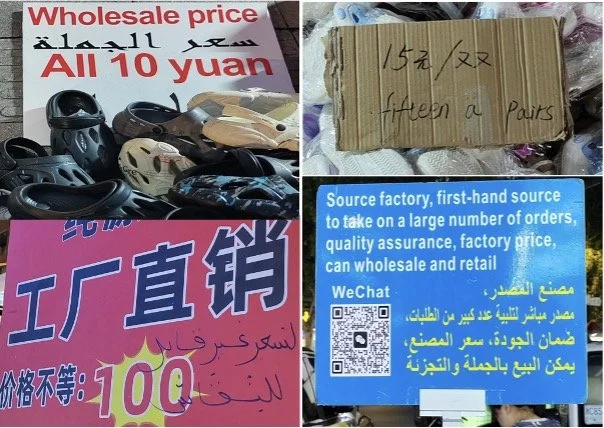
Figure 6: small grass-roots signs prepared by individual stall owners (in English and Arabic).
Such numerous people-to-people interactions create dynamic and complex sociolinguistic, anthropological, and sociological ecologies. Figure 7 top left shows a middle-aged Chinese lady selling fruits and drinks. Fascinatingly, as an example of grass-roots multilingual communication associated with low-end globalization, she puts up a sign featuring Chinese and Arabic. The sign says ‘cold watermelon’ in both languages, which makes sense given the fact that Arabic is a commonly understood language in Yiwu among foreign traders. Figure 7 top right illustrates an old Chinese lady providing shoe shining/cleaning service to a foreigner (presumably from India). This lady recently became an online celebrity on a few Chinese social media sites such as Douyin and Wechat, due to her ability to exhibit impressive multilingual repertoire in various languages such as English, Arabic and Spanish. She frequently greets foreign traders with ‘assalamu alaikum’ (greetings in Arabic), hello, and hola (greetings in Spanish). Figure 7 bottom illustrates a Chinese old lady selling fruits on a footbridge in Yiwu close to a major trading mall. She leans against a large multilingual advertising sign in English, Arabic (incorrectly formatted) and Spanish. Also, as a fascinating sight, in front of the Beyti restaurant, beggars greet Arab passers-by with ‘assalamu alaikum’ and ask for money. Clearly, multilingualism is a way of life in Yiwu. It is also a vital kind of ‘capital’ to make money and bring home the bacon. However, characteristic of such grass-roots communication is often the basic and imperfect use of language. This shows the often focus on functionality over complete grammaticality and perfection (Gu 2025) in an absolute sense. Sometimes, the use of language (e.g. English and Arabic) can be incorrect, difficult to understand or poorly formatted. The Arabic text in Figure 7 bottom, for instance, is incorrectly formatted. Figure 8 shows a sign ‘Code Proceeding’, whose meaning is unclear. This is probably a wrong translation of the Chinese phrase 断码处理 using translation software. The Chinese phrase should have been rendered as ‘odd size clearance’.
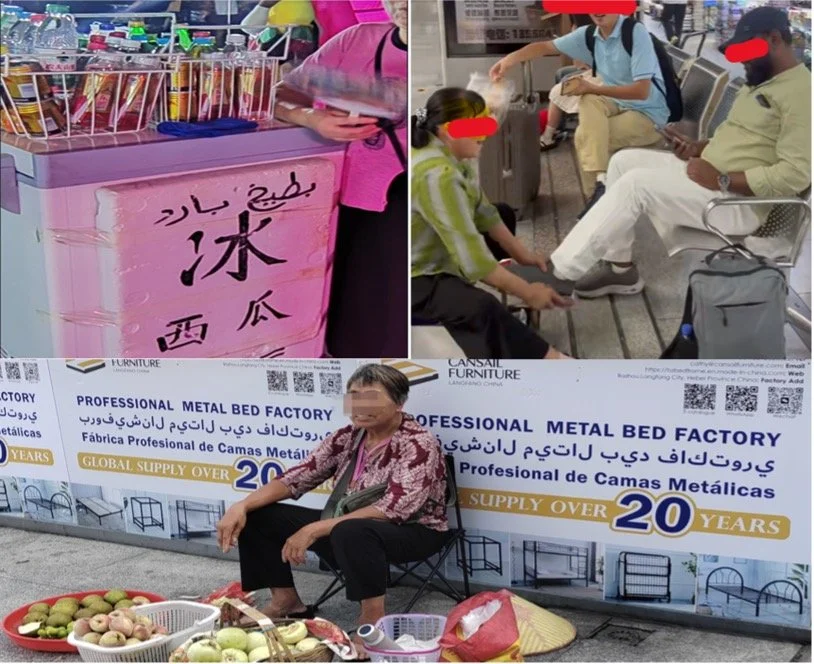
Figure 7: fascinating sociolinguistic, anthropological and sociological ecologies in Yiwu driven by foreign traders and businessmen.
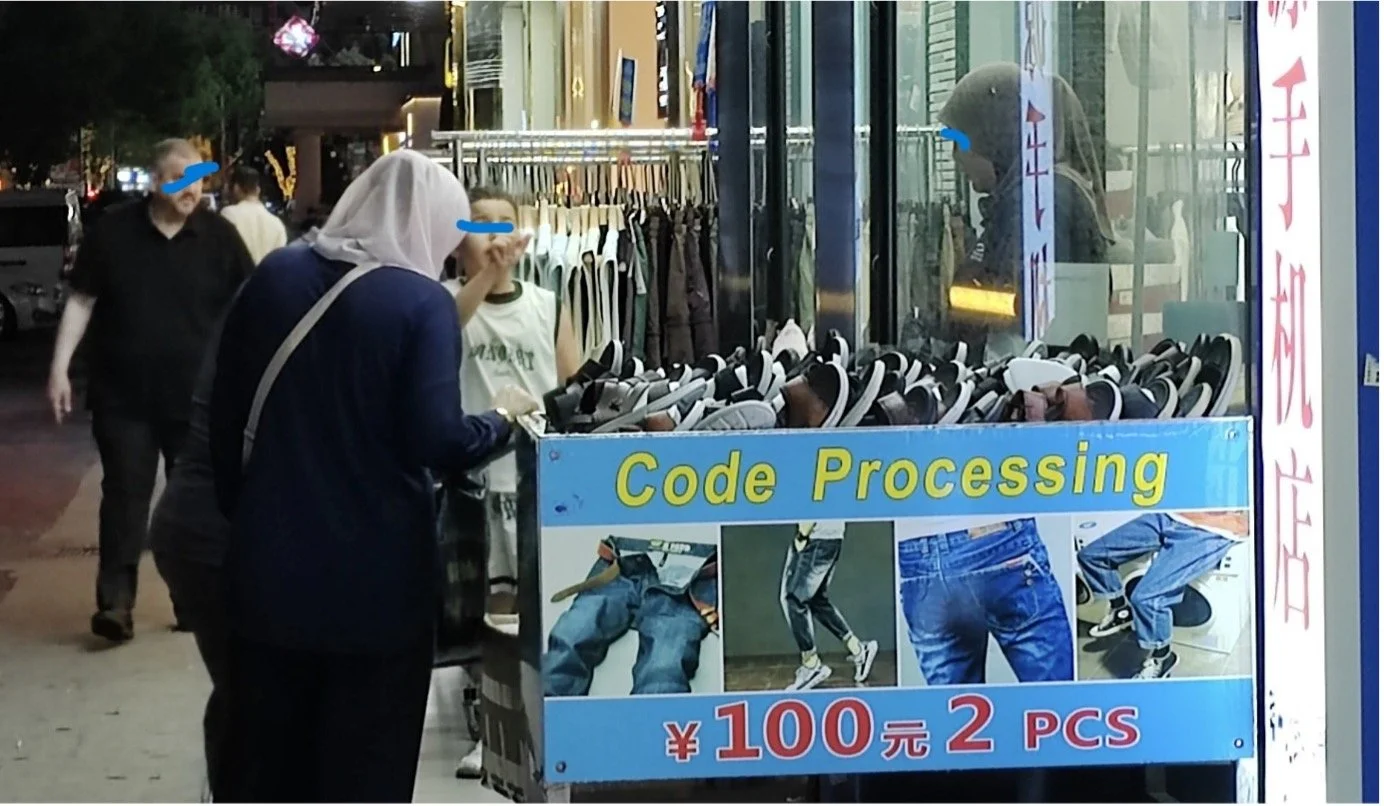
Figure 8: code processing.
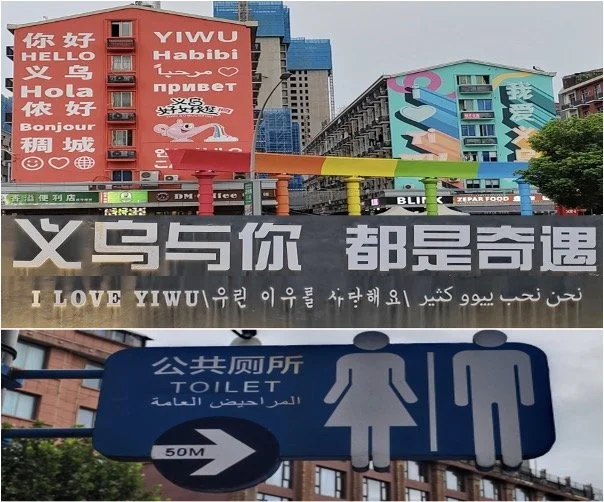
Figure 9: multilingualism as asset and resource.
Overall, the examples illustrated in the figures highlight the transformative power of business and trade in shaping the face of an otherwise homogeneous Chinese city in a context of (low-end) globalization. The existence of a large foreign trading community leads to several ethnic areas or enclaves, carving out fascinating liminal and hybridized spaces on Chinese soil. This also gives rise to interesting sociolinguistic, anthropological and sociological ecologies. These seemingly mundane everyday scenes on the ground are far from ordinary and are indeed highly unique in nature in the Chinese context. In many ways, such scenes are a fascinating sight to behold, which are only visible in cities like Yiwu and also Guangzhou. These trade cities are the hubs of low-end globalization and major intercultural connecting points. In these places, individual small business owners improvise and resort to a range of communicative means to communicate with a superdiverse group of foreigners from different cultures.
In Yiwu, multilingualism is an asset and resource. In trading malls, free foreign language classes are regularly held. At a more official level, the city’s diversity and multilingualism are also openly celebrated in the public space. Figure 9 shows paintings, street art and street signs etc. that feature various languages. Clearly, multilingualism is seen as an asset, representing the city’s linguistic repertoire. Such a linguistic repertoire can contribute to business and city branding. As far as diversity and multiculturalism are concerned, Yiwu and Guangzhou are in many ways forerunners. Such urban spaces are sites of an experimentation. That is, to a great extent, Yiwu and Guangzhou represent a testing ground to see whether multilingualism and multiculturalism might work in a traditionally homogenous East Asian context. Such an experiment is of great relevance in a context of low-birth rate in an increasingly ageing China (where the introduction of foreign migrants or foreign workers might be a necessity at some point).
References
Appadurai, Arjun (1990). "Disjuncture and Difference in the Global Economy." Theory, Culture & Society 7, 295–310. https://doi.org/10.1177/026327690007002017.
Cohen, Erik and Mark Neal (2012). “A Middle Eastern Muslim tourist enclave in Bangkok.” Tourism Geographies 14(4), 570–98.
Gu, C. (2024a). “The (un)making and (re)making of Guangzhou’s ‘Little Africa’: Xiaobei’s linguistic and semiotic landscape explored.” Language Policy 24, 51–84. https://doi.org/10.1007/s10993-024-09689-4.
Gu, C. (2024b). “Linguistic landscaping in Kathmandu’s Thamel ‘Chinatown’: language as commodity in the construction of a cosmopolitan transnational space.” Contemporary South Asia, 32(3), 360–385. https://doi.org/10.1080/09584935.2024.2378442.
Gu, C. (2025). “A sociolinguistics of low-end globalization in Guangzhou: Multilingualism, semiotics, and translanguaging.” International Journal of the Sociology of Language. https://doi.org/10.1515/ijsl-2024-0142.
Gu, C. (2026). Visualising the changing face of Hong Kong: a turn towards multilingualism? Geography, 111(1), 35–41. https://doi.org/10.1080/00167487.2026.2604988.
Mathews, G. (2011). Ghetto at the Center of the World: Chungking Mansions, Hong Kong. Chicago: The University of Chicago Press.
Muniandy, P. (2015). “Informality and the politics of temporariness: Ethnic migrant economies in Little Bangladesh and Little Burma in Kuala Lumpur, Malaysia.” International Sociology, 30(6), 561–578.
Piller, Ingrid (2018). “Dubai: Language in the ethnocratic, corporate and mobile city.” In Dick Smakman & Patrick Heinrich (eds.), Urban sociolinguistics: The city as a linguistic process and experience, 77–94. Abingdon, Oxon: Routledge.
Santos Rovira, J. M. (2025). “Beyond words: Navigating Lisbon’s linguistic landscape in the era of mass tourism and migration.” Journal of Language and Social Psychology 44(6), 928-960. https://doi.org/10.1177/0261927X251339207.
Vertovec, S. (2007). “Super-diversity and its implications.” Ethnic and Racial Studies 30(6), 1024–1054.
Chonglong Gu is a scholar affiliated with the Hong Kong Polytechnic University. He works on topics and areas such as sociolinguistics, multilingualism, linguistic and semiotic landscape, urban geography, linguistic anthropology, and translation and interpreting studies. He can be reached at: Chonglong.Gu@polyu.edu.hk.
To cite this essay, please use the bibliographic entry suggested below:
Chonglong Gu, “Capturing mundane everyday grass-roots multilingualism in Yiwu, China,” criticalasianstudies.org Commentary Board, March 10, 2026; https://doi.org/10.52698/DPVJ3353.