
Photo Essay | Stephen Black, Children of Vietnam: Reflections on a 1979 Photo Exhibition in Melbourne
Introduction
The war in Vietnam ended fifty years ago when the communist forces of North Vietnam overran Saigon, then the capital of South Vietnam. Just three years later, in August and September 1978, I visited Vietnam as part of an educational tour organized by Professor Stewart Fraser from La Trobe University in Melbourne. I was a high school history teacher at the time, and this tour was a rare visit by Westerners to Vietnam in the early post-war period. The decade after the war was very challenging for Vietnam as the newly unified socialist nation sought to recover from the “American War.”
1975-1986 in Vietnam is known as the “Subsidy Period,”[1] a decade of doctrinaire socialism based on the Soviet model. The north of Vietnam had experienced this socialist model since the time Ho Chi Minh established the Democratic Republic of Vietnam in 1954, but it was new to the south of the country following the fall of Saigon in 1975. It was a period of social and economic hardships for the everyday lives of a great many Vietnamese people. Moreover, many thousands, particularly in the south, chose to flee the country as “boat people.”[2] In 1978, at the time when I joined the tour of Vietnam, a “wave” of Vietnamese boat people was arriving on the shores of northern Australia,[3] with reports in the popular media of perilous sea journeys and escapes from a system of political and economic repression. In the wake of the political divisions and rancour in Australia that accompanied the country’s military participation in the Vietnam war in the 1960s and early 1970s, Vietnamese boat people arrivals in the late 1970s were a highly contentious political issue.[4]
Our educational tour of Vietnam included Hanoi in the north and Ho Chi Minh City (formerly Saigon) in the south, along with visits to surrounding areas.[5] With relative freedom to independently traverse city streets, I took many photographs, much in the style of a documentary or street photographer. Primarily, I was keen to capture informal images of people going about their everyday lives. On my return to Melbourne, I processed the (mainly black and white) photographs and sought to display a collection of them for public exhibition. At the time, very few Westerners had access to Vietnam, and there was an absence in Western media of photographic representation of life in Vietnam in the immediate post-war era. In September 1979, I exhibited a selection of my photographs in a Melbourne suburban art gallery (Gallery 333, long since closed). As most of the photographs focused on children, I called the exhibition Children of Vietnam.
Exhibition Photographs
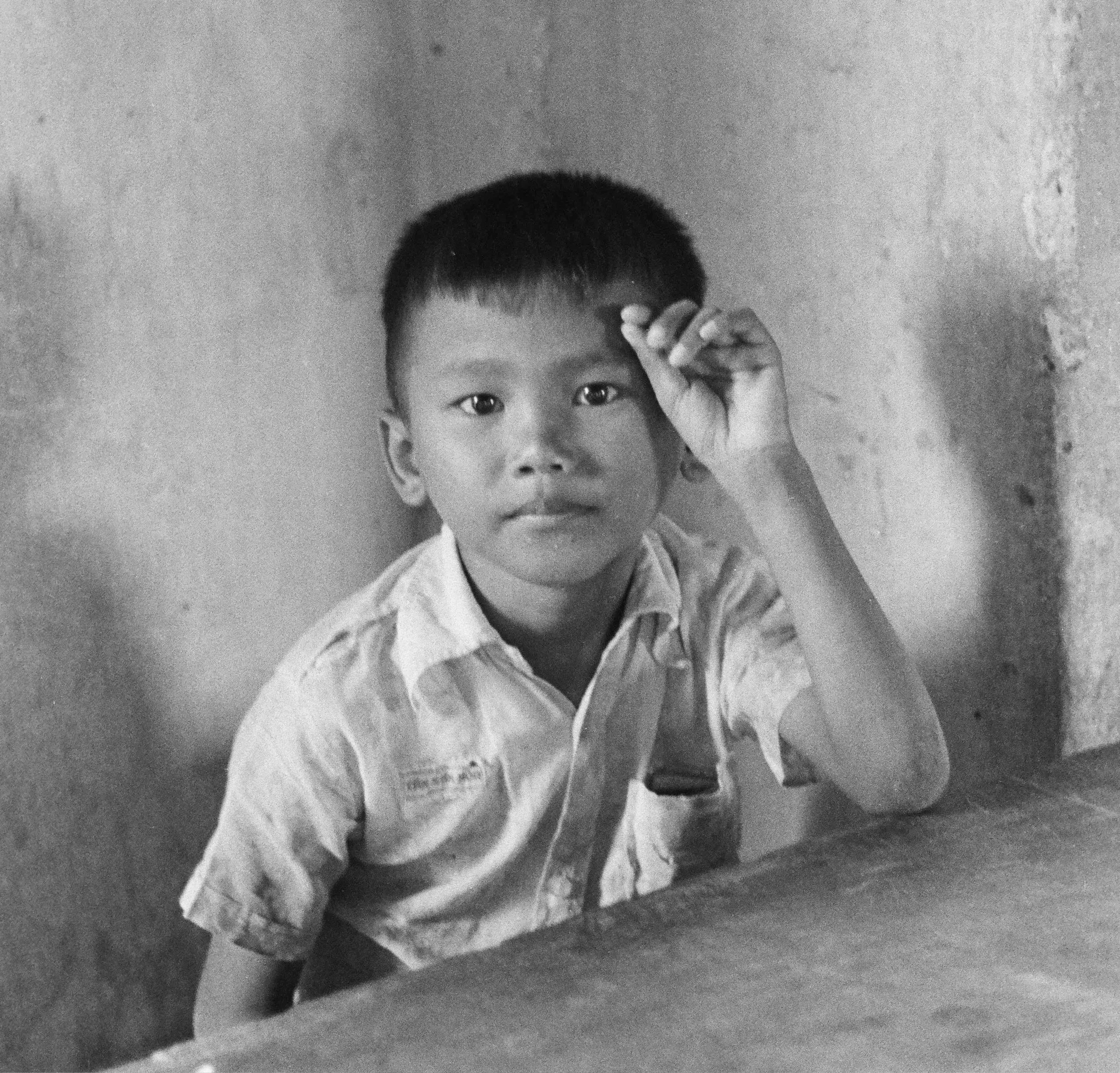
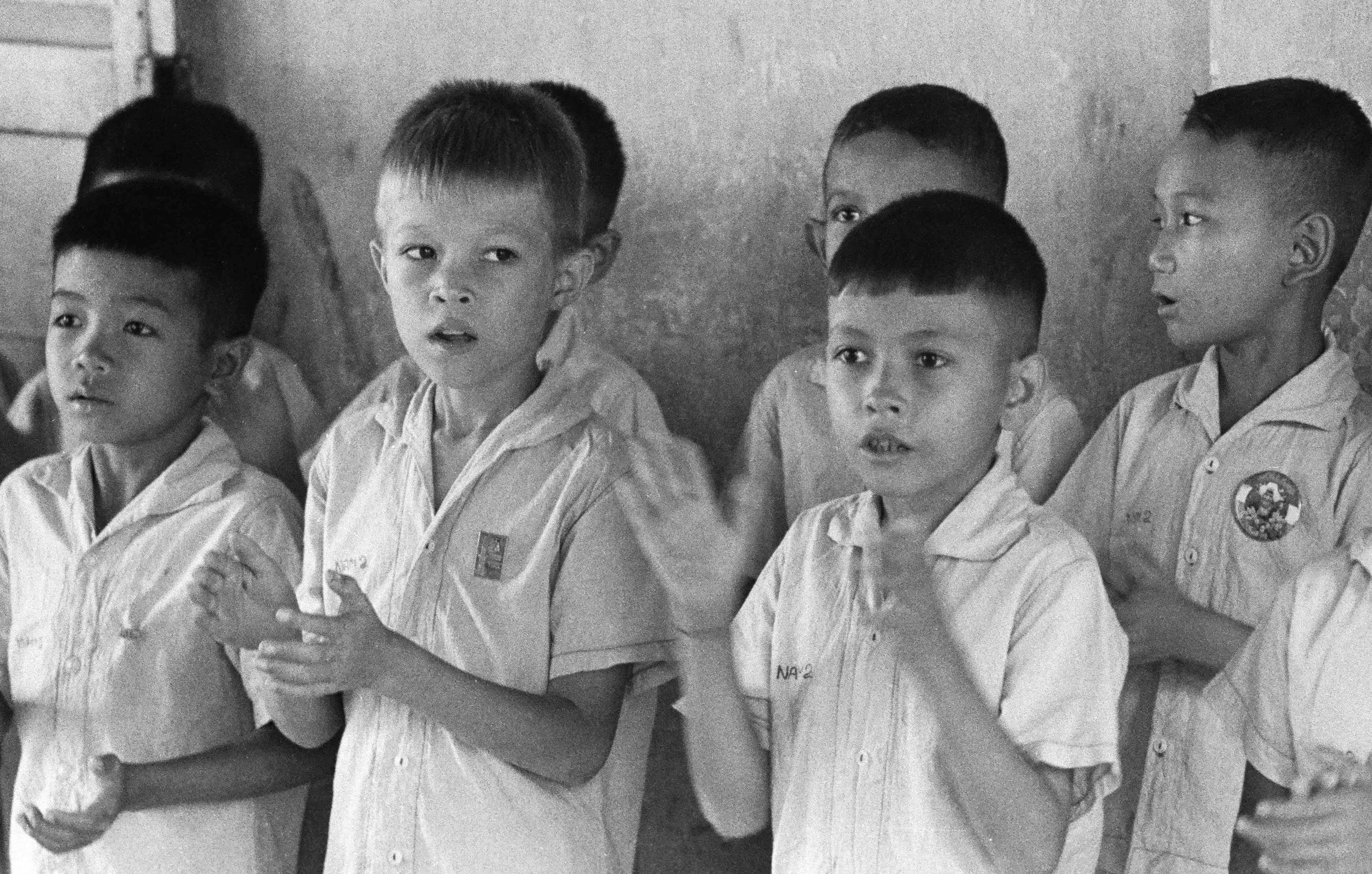
I took hundreds of photographs on the tour, depicting many aspects of everyday life in Vietnam,[6] but it was photographing the post-war generation of children that particularly resonated with me; informal images of children framed through my camera lens that I found aesthetically pleasing and evocative of our tour (Photos 1, 2, 3 and 4). On my return to Melbourne when I began to prepare for the exhibition, it was photographs of children that predominated.
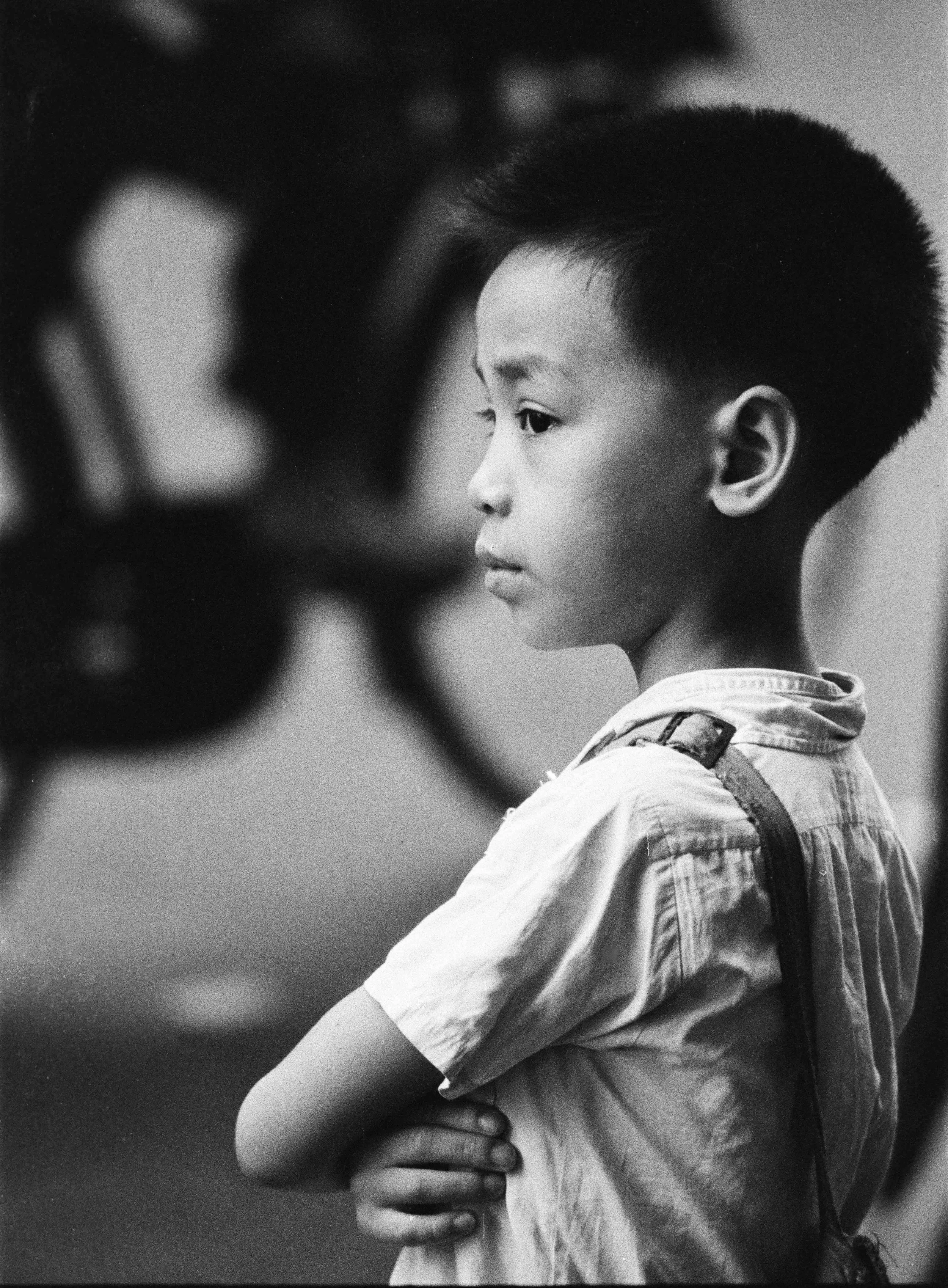
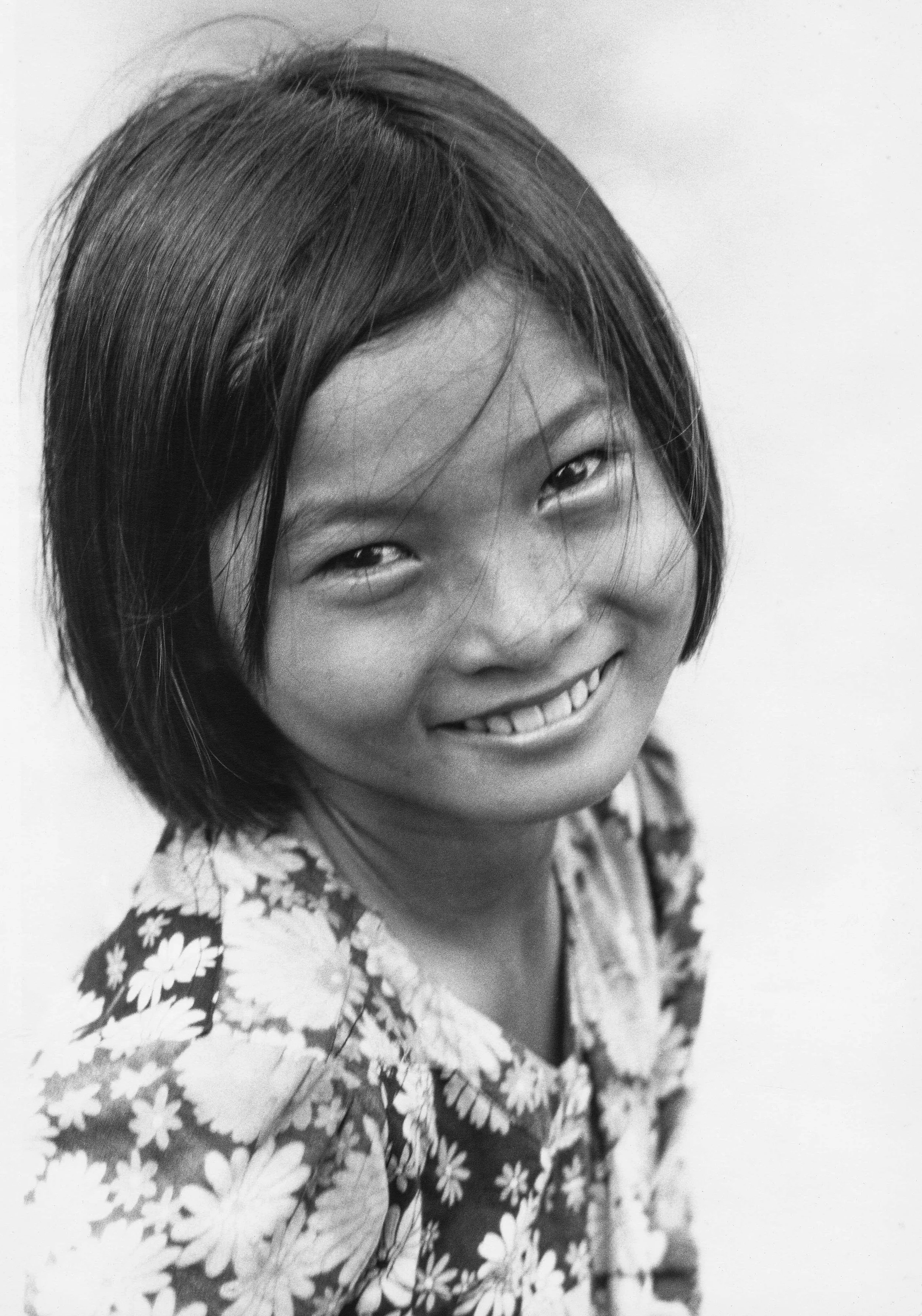
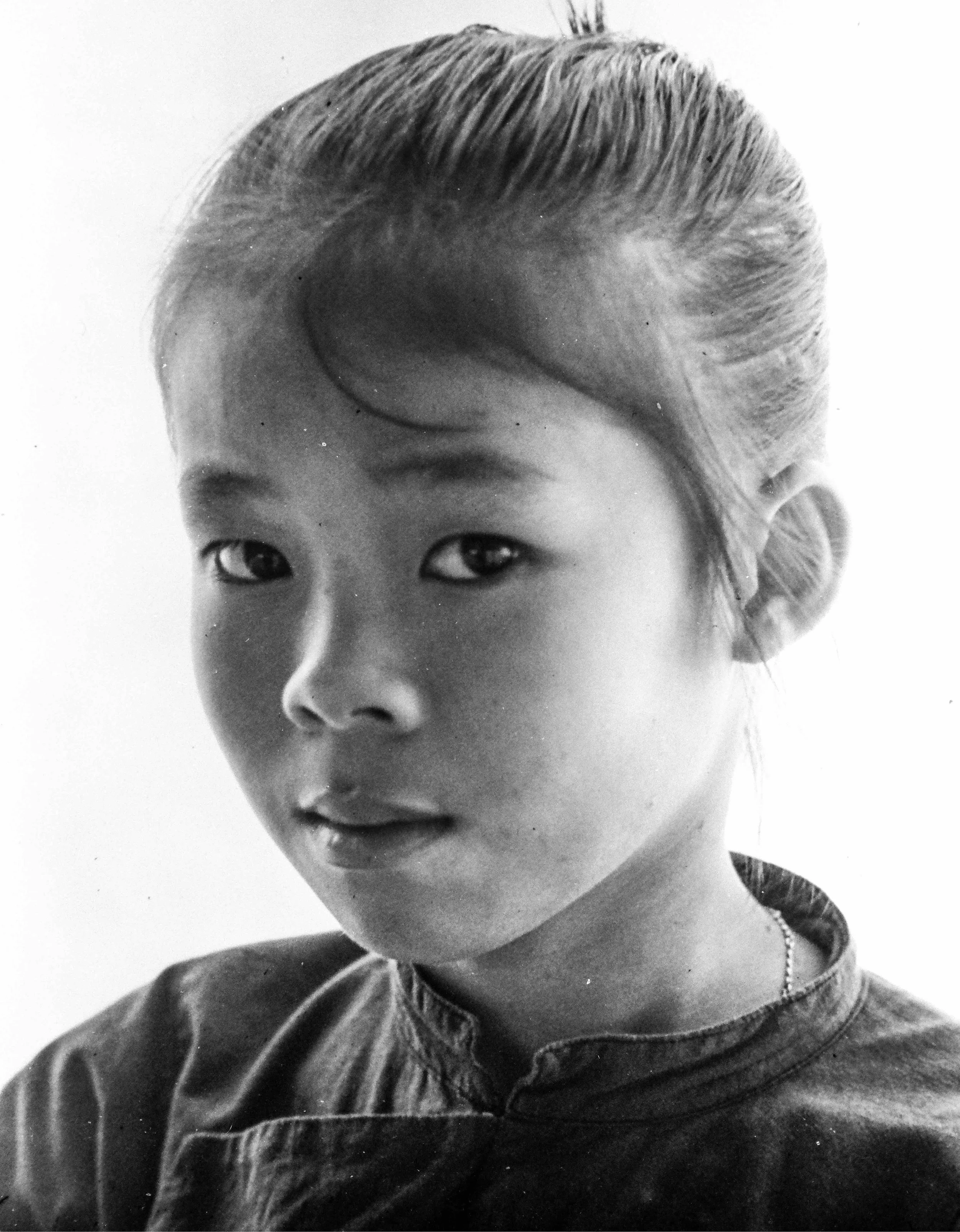
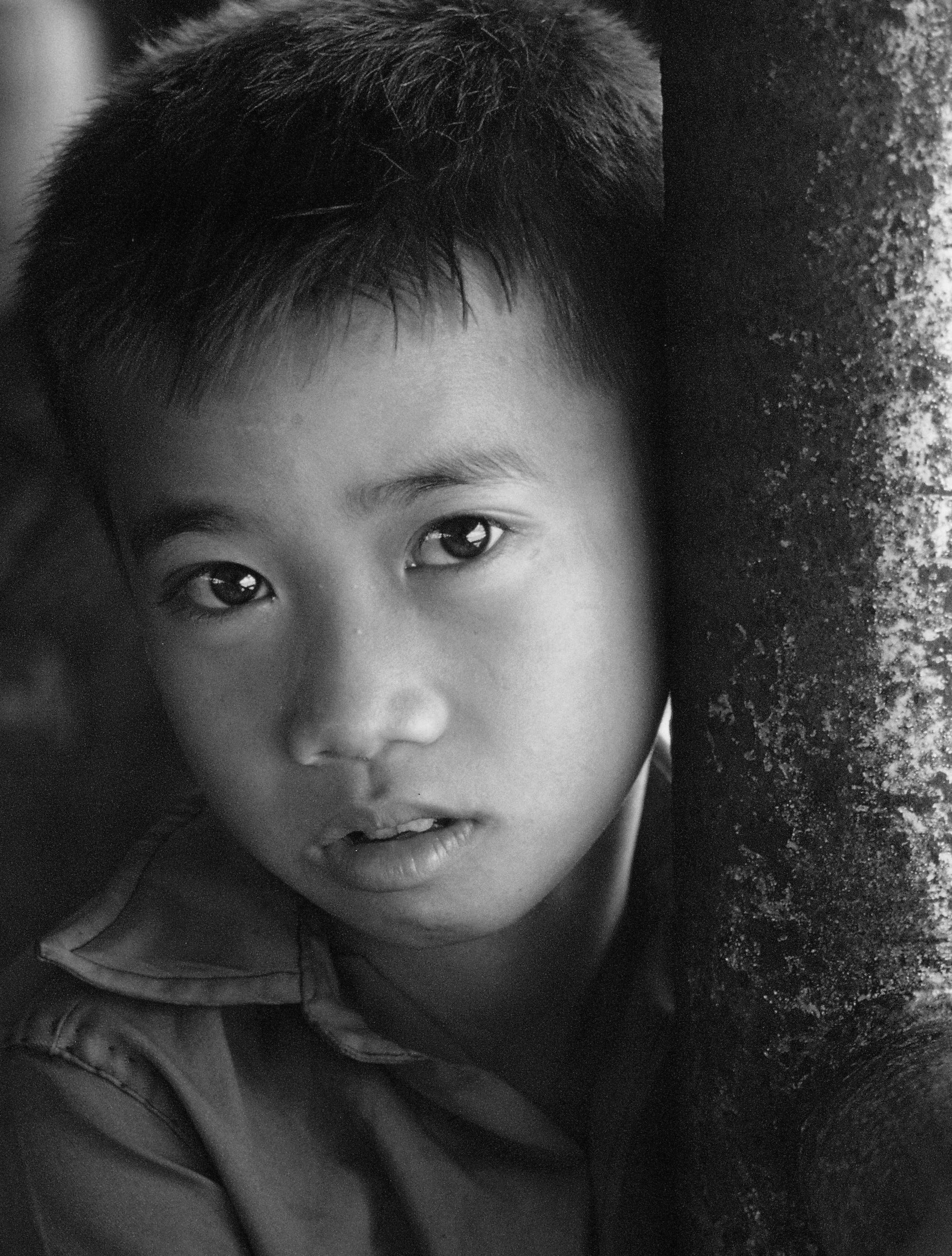
My photographs featured an array of everyday themes, including the ubiquitous theme of older children caring for younger children, presumably their siblings (Photos 5 and 6). Close tactile bonds between peers were also a feature (Photo 7 and 8).
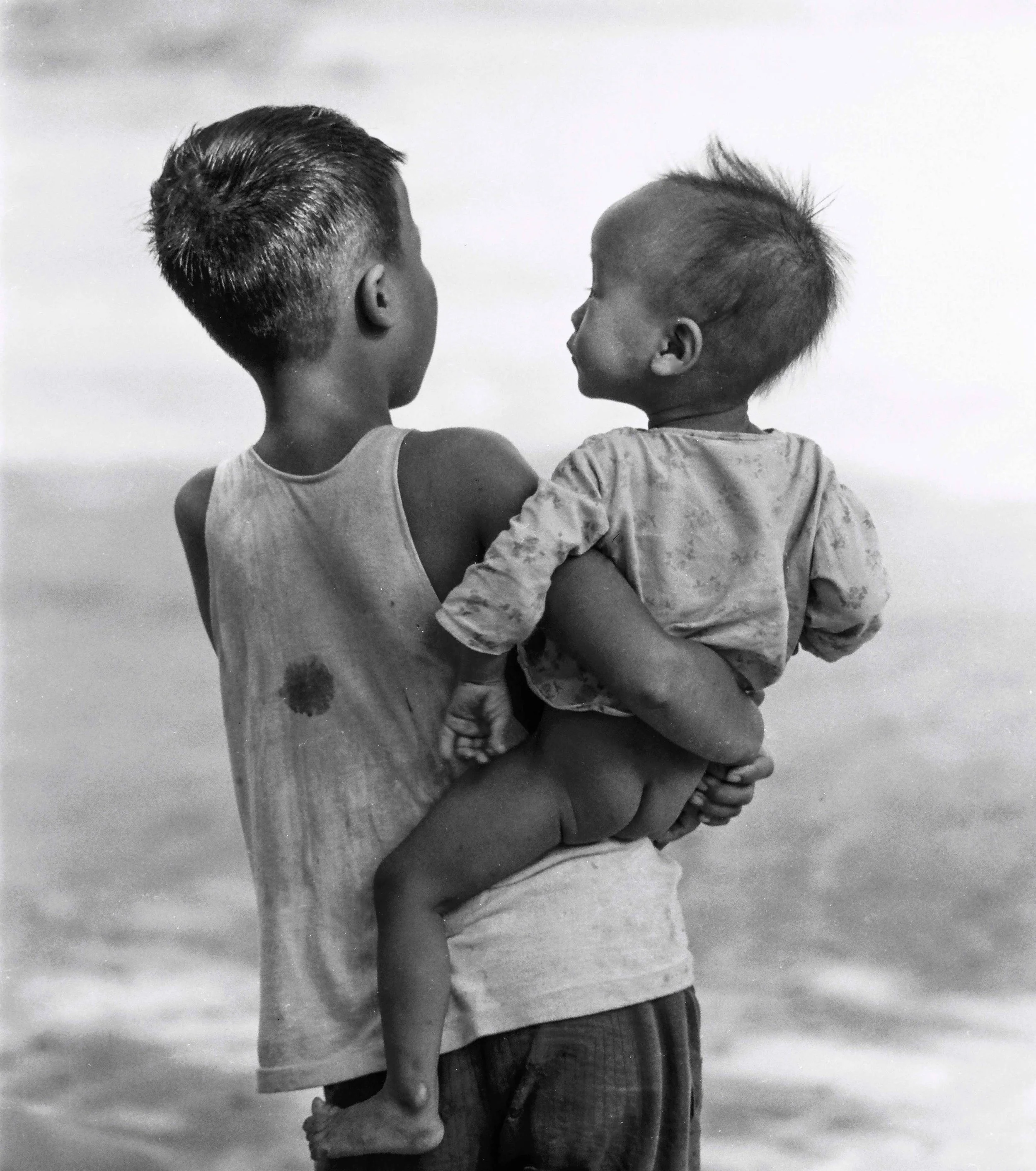
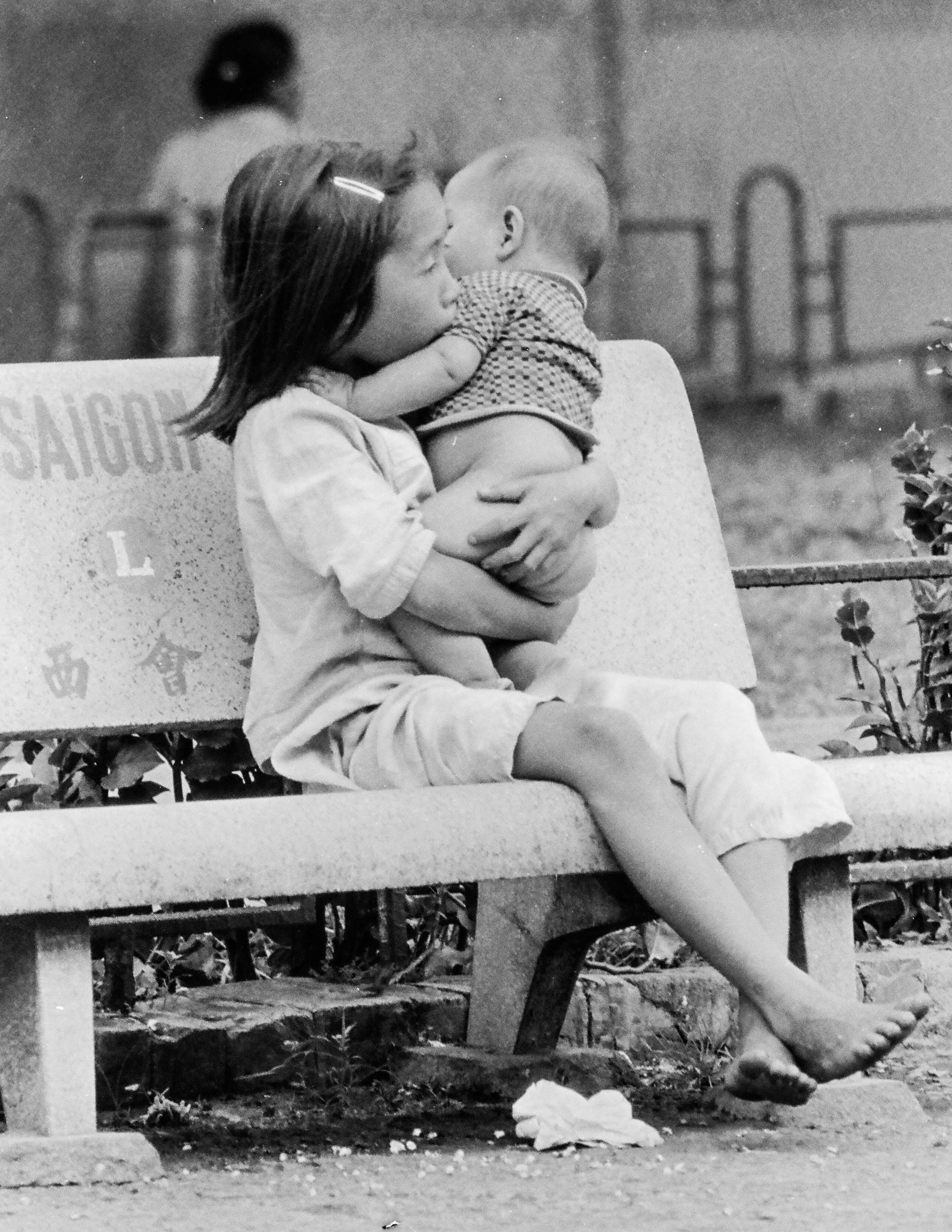
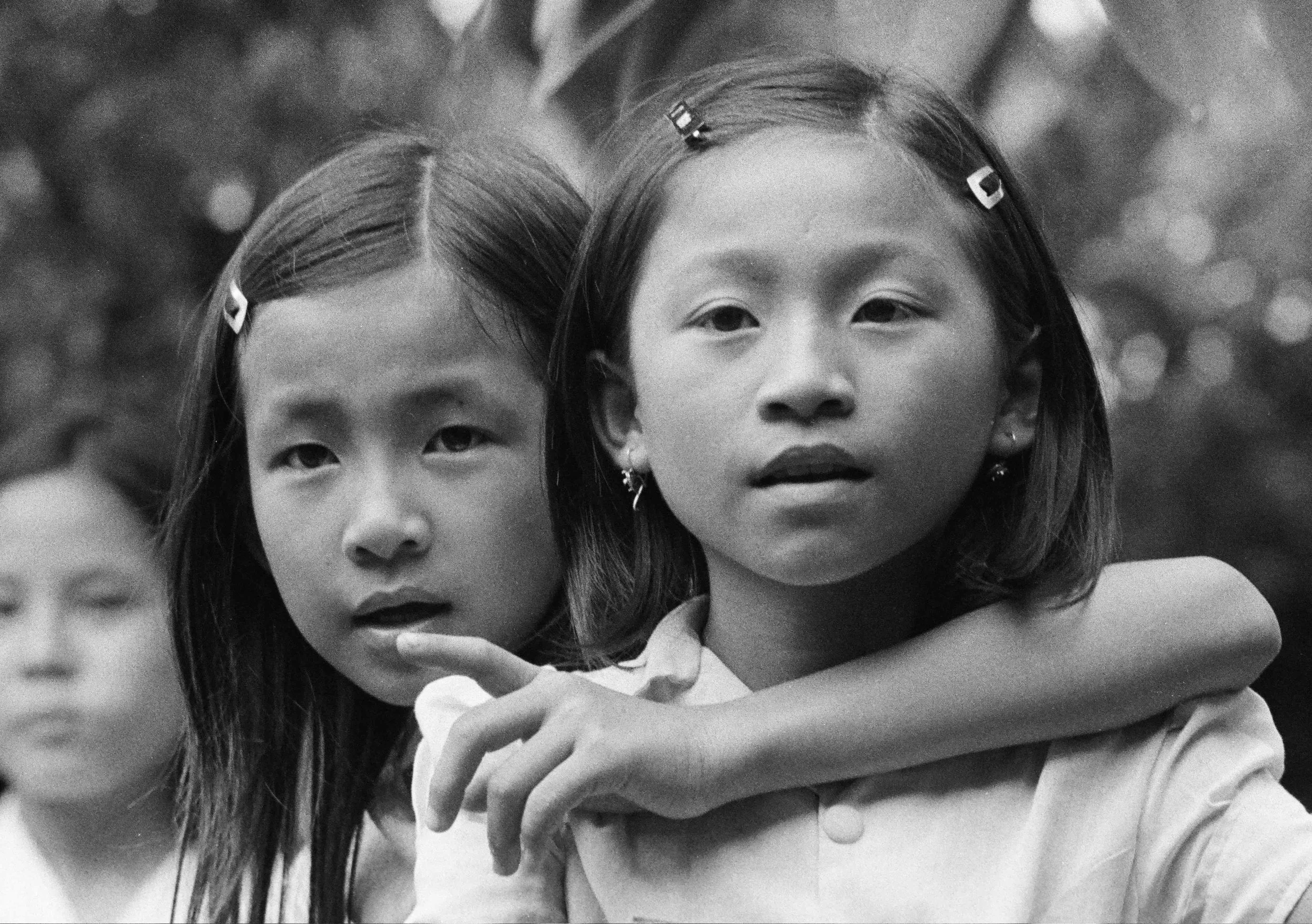
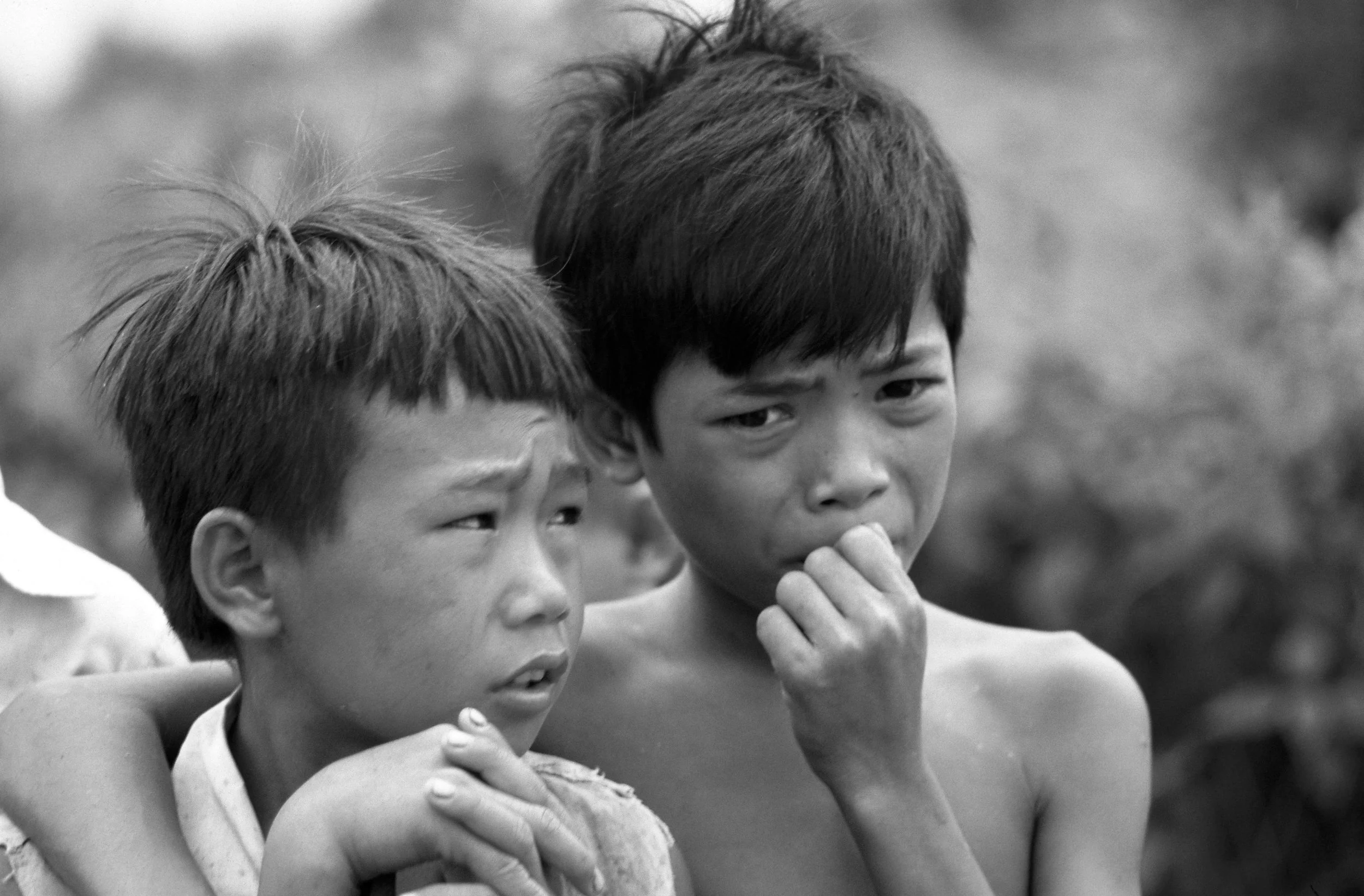
Not all children were faring equally in Vietnamese society. There were, for example, many so-called “street children,”[7] largely homeless and in poverty, particularly in Ho Chi Minh City (Photo 9 and 10). Their ragged appearance could be contrasted to the uniformed and disciplined children of the Ho Chi Minh Youth Pioneers Association in their white shirts and red ties (Photo 11 and 12). This latter group fully embraced and promoted the government’s socialist ideals and the legacy of “Uncle Ho.”
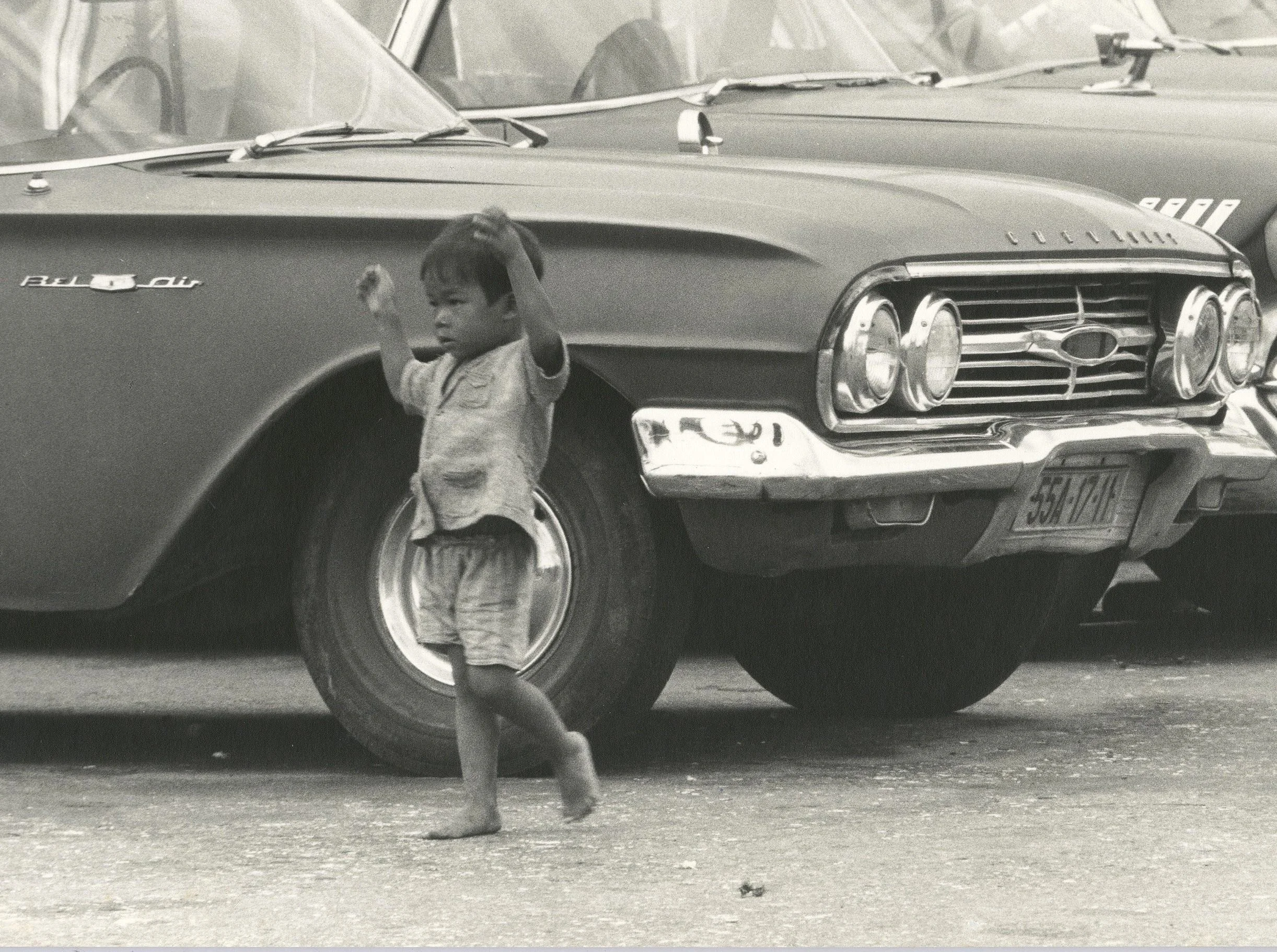
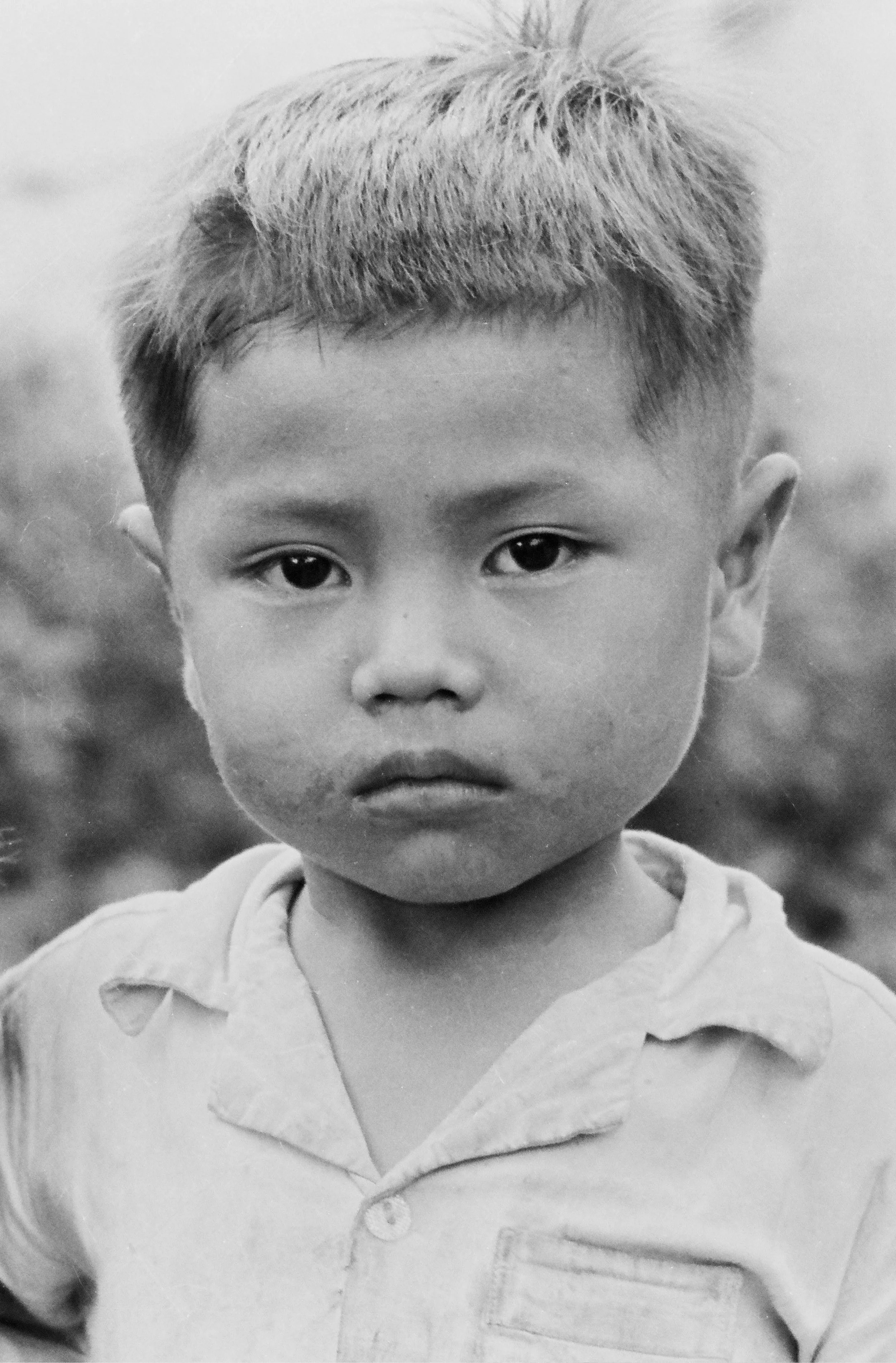
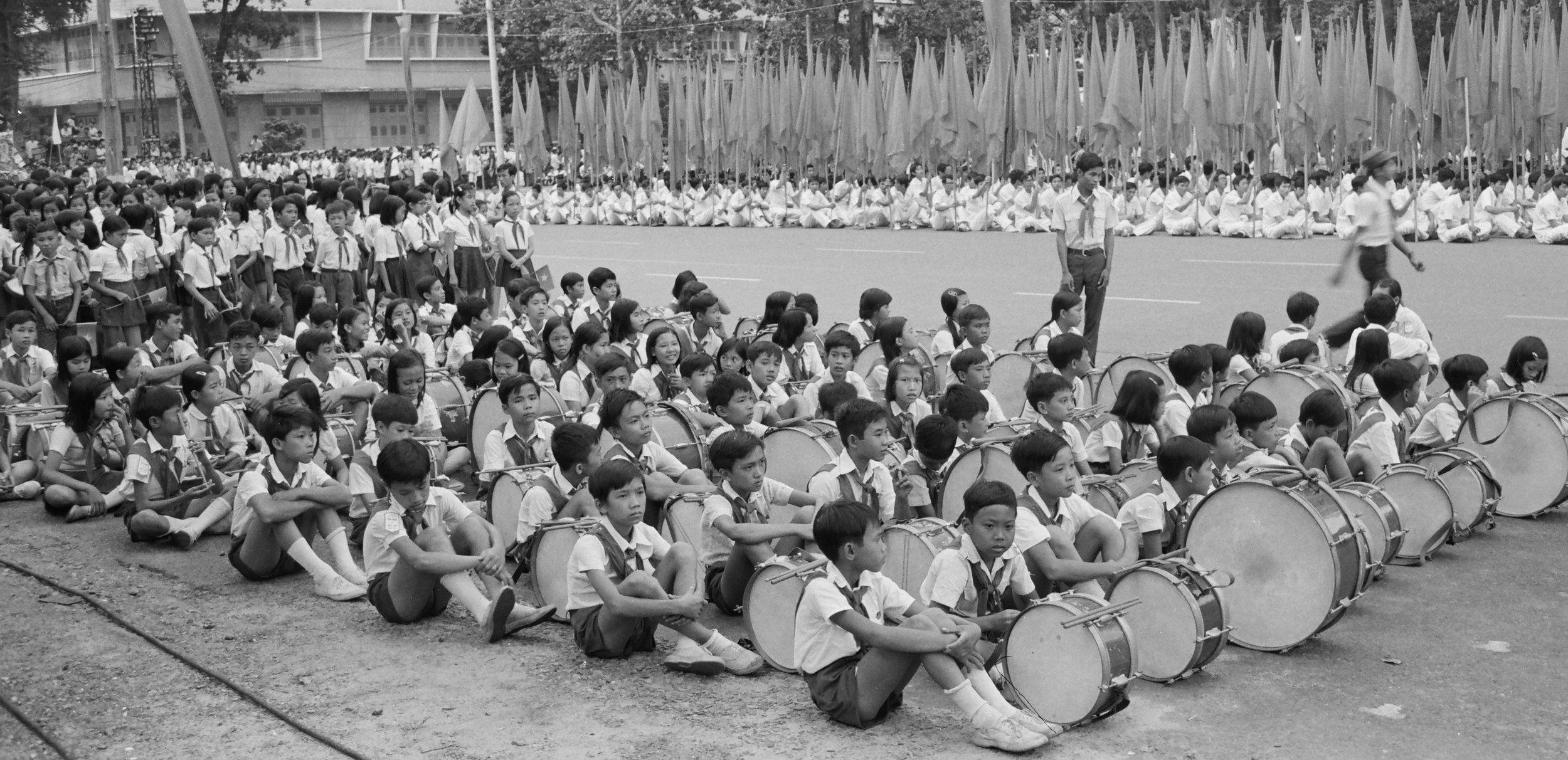
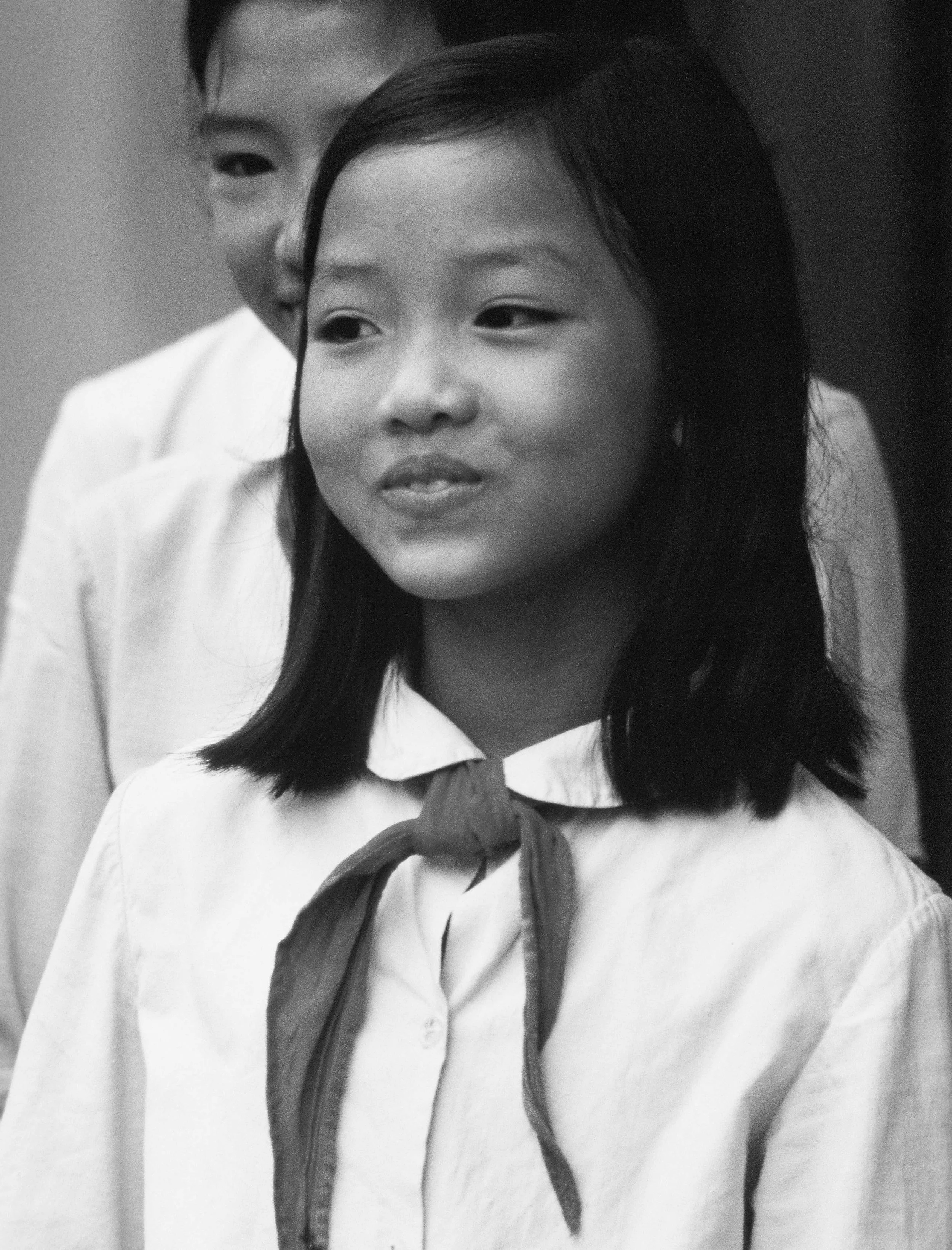
Another category of children that featured in my exhibition, were those from an orphanage that we visited in Ho Chi Minh City (Photo 13). These images included children who could be considered “Amerasian,” those fathered by US soldiers during the war[8] (Photo 14).
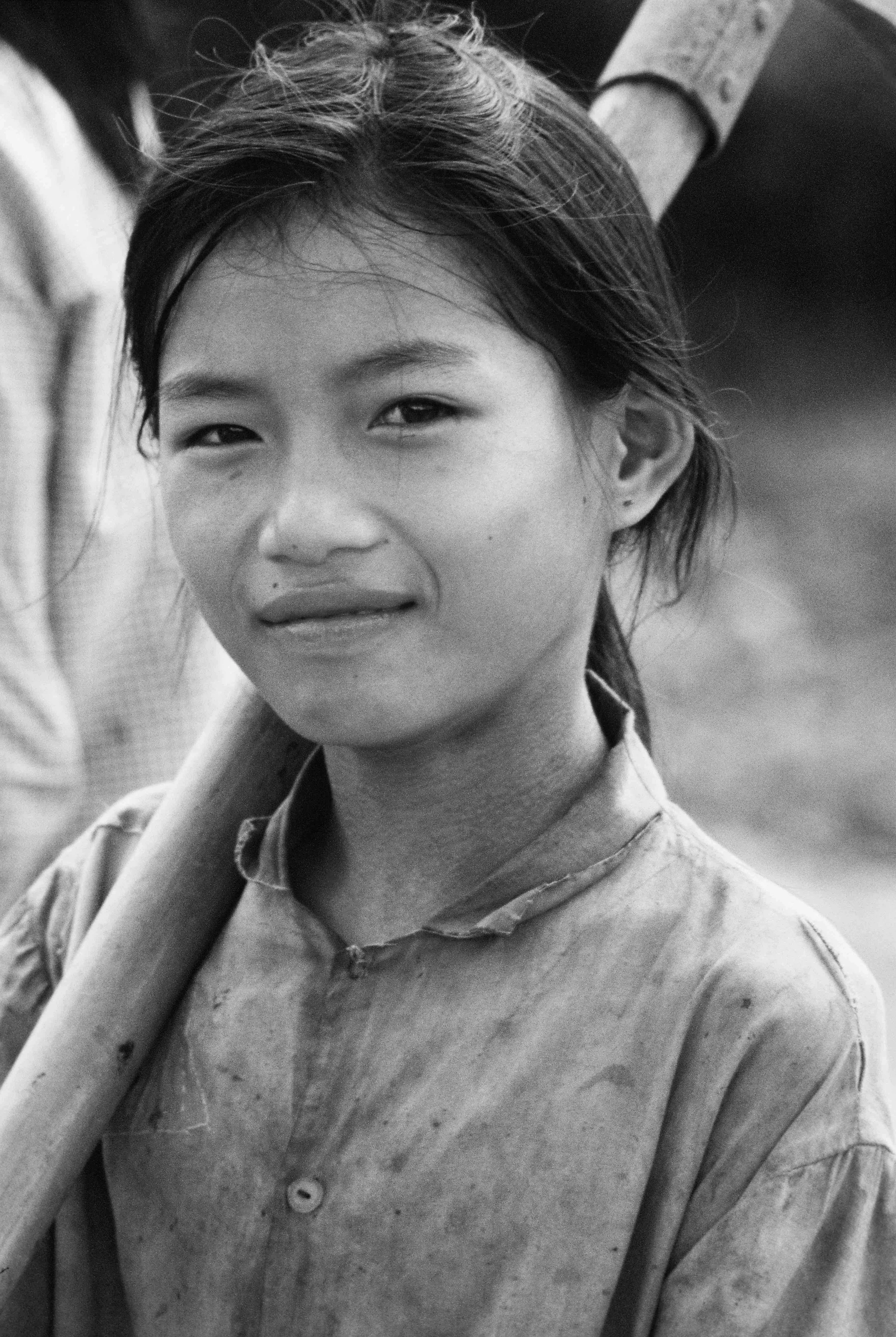
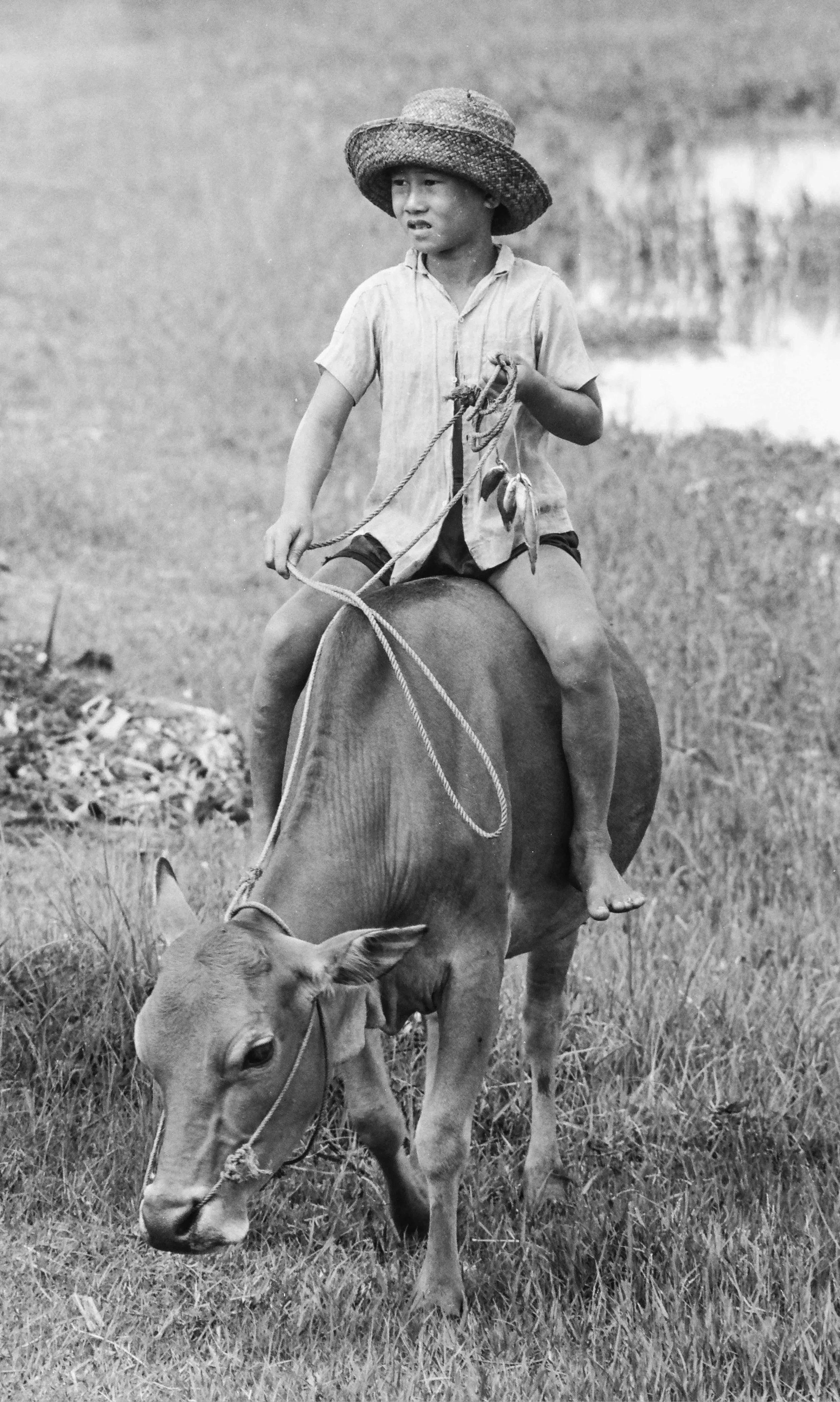
While most of my photographs featured children in urban settings, mainly Hanoi or Ho Chi Minh City, our tour also included rural farming areas, such as the Mekong Delta. Children in these areas made an active contribution to the local farming workforce (Photo 15 and 16).
Responses to the Exhibition
It should be stated that my exhibition was limited in scope, held in a local commercial art gallery in mid-suburban Melbourne, but it was reviewed favourably in the prominent daily newspaper, The Age. The paper’s photography critic, Tony Perry, commented of the exhibition: “This is a delightfully unpretentious study of a rather sad people.”[9] It is this element of affect - sadness - that I focus on in this essay, because it appeared to be a response shared by many of those who viewed the exhibition. For example, the opening evening of the exhibition was attended by many of my fellow teaching colleagues and their associates, and their anecdotal comments to me were predominantly one of sadness. Only recently, in light of a research focus on “feeling” in photography, have I deliberated on the emotional responses of those who viewed the exhibition.[10]
On the tour, I made no conscious attempt to capture images that conveyed a particular mood or disposition; these were natural, candid photographs taken in a documentary or street photography style. In the exhibition itself, none of the photographs was labelled. Even the images of children in the orphanage were not identified as such and had to be inferred. The question, therefore, is why viewers of the exhibition, and the newspaper critic in particular, should have expressed the predominant emotion of sadness when viewing the photographs? Indeed, sadness extending to the whole Vietnamese population according to the newspaper critic. I would contend that the answer lies beyond the images themselves.
“Beyond the Visible”
To understand and appreciate why exhibition participants felt a sense of sadness on viewing the photographs, it is necessary to look “beyond the visible, to that which may not be articulated or even visible within the photographic frame …”[11] This brings into play the impact of the broader socio-political contexts of Melbourne society at the time of the exhibition in the late 1970s, and how they related to the then concluded war in Vietnam.
Australia’s participation in the war in Vietnam had been a highly contested public affairs issue from the mid-1960s through to the early 1970s. It involved a succession of mainly conservative Australian Prime Ministers who, within a Cold War foreign policy framework, sought a strong security alliance with the US, and thus promoted Australia’s engagement in the war.[12] One such Prime Minister (Harold Holt), on a trip to Washington in 1966, encapsulated this pro-US standpoint by reciting the mantra: “All the way with LBJ.”[13] In total, Australia committed over 60,000 troops to the war. The leading conservative political parties (the Liberal/Country Party Coalition) governed on an anti-communist platform strongly promoted by most news media outlets. Fear of the Red Menace and the prevailing domino theory in Asia initially held popular appeal in the mid-1960s,[14] but as the war progressed, public sentiment shifted and fractured.
The opposing anti-war movement began in large part with protests by the student left in Australian universities, and a key focus of their opposition was conscription. The movement gained considerable momentum through the latter part of the 1960s, particularly following events in 1968.[15] These included the My Lai massacre committed by US forces in Vietnam, and the apparent sense of futility of trying to defeat the communist forces of the North Vietnamese following the Tet offensive in which these forces reached deep into Western allied strongholds.[16] Adding backdrop and momentum to anti-war protests in Australia were transnational protests on a range of counterculture issues, including the rights of students (Sorbonne), women, and civil rights and black power movements in the US.[17]
In Australia, there was a new militancy in opposition to the war and conscription, resulting in violent protests in Melbourne in July 1968.[18] By the end of 1968, opinion polls indicated that less than half of Australians supported their country’s involvement in the war, and in subsequent years opposition to the war extended beyond student groups and leftist unions to increasingly larger segments of the broader population.[19] In 1970 and 1971, in the wake of US Moratorium marches, and adopting similar language and protest practices, there were massive Moratorium marches in Australian capital cities against the war and against conscription, particularly in Melbourne, where an estimated 70,000 people marched down the main city streets.[20] The Moratorium marches marked the zenith of anti-war protests in Australia, and while it was a conservative government in late 1971 that announced the withdrawal of Australian military forces from Vietnam, it was the election of a Labor government led by Gough Whitlam in late 1972, that finally ended conscription.
I first arrived in Australia from the UK in late 1975, and so I never experienced firsthand the public furor over the war in Vietnam. But I felt it. As a newly appointed high school teacher in Melbourne, it was impossible to ignore the legacy of anti-war sentiment. Many of my fellow teachers had been university students at the time of the Moratorium marches, and their militant union activities and progressive politics as teachers, including numerous strike actions and strong advocacy for human rights, (e.g. women, homosexuals, indigenous), were in large part shaped by their experiences of the anti-war movement.[21] Most teachers in my school (me included) belonged to a militant teacher union, the VSTA (Victorian Secondary Teachers’ Association). By the time of my exhibition in late 1979, the Moratorium marches were almost a decade in the past, and while the politics of the left had less of a revolutionary impact,[22] for my teaching colleagues, and no doubt many others, the Vietnam war remained an emotional flashpoint.
Children, Photographs and War
Emotions were likely further heightened by the focus on “children” in my photographic exhibition. I called the exhibition Children of Vietnam because it largely featured children. But for those who had experienced the anti-war movement in Australia, there was a poignancy to the linkage of children and Vietnam, and thus war, and particularly photographic images. They had previously viewed horrific images in the news media of children maimed by the war, epitomized by the iconic image of nine-year-old Kim Phuc, the so-called “napalm girl,”[23] an image that became etched into the collective memory of the war in the US,[24] and doubtless in the memory of many Australians. There was even a publication available for sale in Melbourne at the time of my exhibition called The Children of Vietnam, which featured deeply distressing images of children disfigured by the war.[25] The focus on children impacted by the war was not confined to Western media as socialist films and photographs during wartime Vietnam also focused on traumatized children. Christina Schwenkel, a sociocultural anthropologist, refers to wartime films and documentaries made by North Vietnamese, East German and Cuban filmmakers to explain how images of children, innocent victims of war, were used to mobilize “affective communities” to take action to oppose the war.[26]
My exhibition photographs differed insofar as they did not feature the conditions of war. There were no images of traumatized children who had been injured or who were suffering as victims of war. At least not directly. As I recall, my primary motive in selecting photographs for the exhibition was aesthetic – a demonstration of the beauty of childhood, framed no doubt by traditional Western understandings of childhood that included innocence and the need for protection.[27] But inevitably, and unwittingly in my case, the images were also political, along with the affective response of many of those who viewed my exhibition. Despite the absence in the photographs of direct forms of injury, the children featured in them may nevertheless be viewed as victims of war seen within the post-Vietnam war context of Melbourne society in 1979. Images of child poverty, “street children,” for example, and children in an orphanage, can be associated with the outcomes of war. For those viewers of my exhibition with an anti-Vietnam war background, my images of children, though relatively benign, would have prompted emotions of sadness as part of their collective memory of strong opposition to what they believed was an immoral war. The exhibition photographs thus became an affective site of politics.[28]
“Presence in Absence”
My photo exhibition in 1979 was viewed initially by people whom I invited and knew– my own teaching colleagues and their acquaintances. For the most part, these teachers were politically progressive and highly unionized, in accordance with a great many young teachers in the late 1970s, particularly in Melbourne (also Sydney[29]). Their affective response of sadness at viewing the photographs was inevitably political. Similarly, I would argue, the art critic’s review in The Age newspaper may be seen to have reflected that newspaper’s often highly critical stance on Australian government policy on Vietnam, and indeed US foreign policy, throughout the war years.[30] But interestingly, those on the other side of the left/right political spectrum might also have expressed a disposition of sadness at viewing the exhibition. As indicated at the beginning of this essay, the late 1970s was the peak period for Vietnamese “boat people” arrivals on Australian shores, and they were welcomed (initially) with some sympathy by the conservative government of the day and by conservative public opinion generally. Vietnam was again a flashpoint for community sentiment as media stories of the harrowing plight of refugee families reinforced for many people their lament at the military defeat in Vietnam, and their opposition to socialism. They experienced sadness not only for the refugees on the boats, but for the children left behind – as represented in my photographs - in what they believed was a socio-economic and politically repressive state.
Thus, for the participants to my 1979 photo exhibition from both sides of the political spectrum, my photo exhibition could not be separated from the emotional impact of the two-decades old war in Vietnam with its attendant highly contested politics. And this was despite the absence in the images themselves of direct linkage to the war. It was a case of “presence in absence.”[31]
References
Ack, T. L. 2021. “Reds at the Blackboard: Militancy in the Teacher Unions.” Marxist Left Review 21. Accessed December 6, 2025: https://marxistleftreview.org/articles/reds-at-the-blackboard-militancy-in-the-teacher-unions/
Betts, K. 2001. “Boatpeople and Public Opinion,” People and Place 9 (4): 34-48.
Black, S. 2025. “Vietnam 1978: Life After War Through the Lens of a Western Tourist,” Journal of Vietnamese Studies 20 (2): 176-209.
Boudet-Brugal, A. (2020). “The USA, Australia and the Vietnam War: "All the way" With the USA?: Cooperation, Tensions and Reciprocal Influence in the 1960s and Beyond,” Cultures of the Commonwealth 23: 85-95.
Burr, R. 2006. Vietnam’s Children in a Changing World. New Brunswick: Rutgers University Press.
Butler, N. 2019. “1968: Victorian anti-war movement gets an injection,” Before / Now, Journal of the Collaborative Research Centre in Australian History (CRCAH) 1 (1):11-26. Accessed December 6, 2025: http://researchonline.federation.edu.au/vital/access/HandleResolver/1959.17/173265
Cartwright, L., and E. Wolfson. 2015. “Introduction: Affect at the Limits of Photography.” Journal of Visual Culture 17 (2): 141-151.
Colebatch, H.G.P., 1994. An Analysis of the Australian Reception of Political Refugees With Particular Reference to the Case of the Vietnamese Boat People. PhD thesis. University of Western Australia.
Colhoun, J. 1979. “The Tet Offensive.” Critical Asian Studies 11 (1): 25-29.
Curthoys, A. 1992. “History and Reminiscence: Writing About the Anti‐Vietnam‐War Movement.” Australian Feminist Studies 7 (16): 116-136,
Girling, J.L.S. 1967. “Vietnam and the Domino Theory.” Australian Outlook 21 (1): 61-70.
Hariman, R., and J.L. Lucaites. 2003. “Public Identity and Collective Memory in U.S. Iconic Photography: The Image of "Accidental Napalm."” Critical Studies in Media Communication 20 (1): 35-66.
Irvine, N. 2015. “‘Couldn’t We Actually Try to Do This in Australia’: Reading the Vietnam Moratorium in Its Global Context.” In Fighting Against War: Peace Activism in the Twentieth Century, edited by P. Deary and J. Kimber. Melbourne: Leftbank Press, 268-290.
Kuhn, R. 1986. Militancy Uprooted: Labour Movement Economics 1974-1986. Melbourne: Socialist Action.
Lee, S. 2017. “The Children of the Vietnam War.” In Children Born of War in the Twentieth Century. Manchester: Manchester University Press, 112-150.
Lipman, J.K. 2011. “The Face is the Road Map: Vietnamese Amerasians in U.S. Political and Popular Culture, 1980–1988.” Journal of Asian American Studies 14 (1): 33-68.
MacLean, K. 2008. “The Rehabilitation of an Uncomfortable Past: Everyday Life in Vietnam During the Subsidy Period (1975–1986).” History and Anthropology 19 (3): 281-303.
Marks, R. 2018. ““1968” in Australia: The student Movement and the New Left.” In The Far Left in Australia Since 1945, edited by B. Piccini, E. Smith, and M. Worley. London: Routledge, 134-150.
Miller, N. 2004. “The Girl in the Photograph: The Vietnam War and the Making of National Memory. JAC 24 (2): 261-290.
Murphy, J. 1993. Harvest of Fear: A History of Australia's Vietnam War. Sydney: Allen and Unwin.
Payne, T. 2007. War and Words: The Australian Press and the Vietnam War. Melbourne: Melbourne University Press.
Pepper, W. 1967. “The Children of Vietnam.” Ramparts Extra, January: 45-68.
Phu, T., Brown, E. and A. Noble. 2020. “Feeling in Photography, the Affective Turn, and the History of Emotions.” In The Routledge Companion to Photography Theory, edited by M. Durden and J. Tormey. London: Routledge, 21-36.
Piccini, J. 2016. Transnational Protest, Australia and the 1960s. London: Palgrave.
Picot, A. 2020. “Vietnam: How We Won Last Time.” Marxist Left Review, April 14, 2020. Accessed on December 6, 2025: https://marxistleftreview.org/articles/vietnam-how-we-won-last-time/
Saunders, M.J. 1982. “The Trade Unions in Australia and Opposition to Vietnam and Conscription: 1965-73.” Labour History: A Journal of Labour and Social History, 43: 64-82.
Schwenkel, C. 2014. “Imagining Humanity: Socialist Film and Transnational Memories of the War in Vietnam.” In Transnational Memory: Circulation, Articulation, Scales, edited by C. De Cesari and A. Rigney. Berlin: De Gruyter, 219-246.
Suri, J. 2009. “The Rise and Fall of an International Counterculture, 1960–1975.” American Historical Review 114: 45-68.
Van Huy, N. 2017. “Life in Hanoi in the State Subsidy Period: Questions Raised in Social Criticism and Social Reminiscences.” In Historicizing Theories, Identities, and Nations, edited by R. Darnell and F. Gleach. Lincoln: University of Nebraska Press, 219-251.
Vo, N. M. 2006. The Vietnamese Boat People, 1954 and 1975-1992. London: McFarland and Company, Inc.
Wölck, S. and C. Rogers. 2015. “Labeling Difference – On Discrimination and the Social Standing of Children Fathered by US Soldiers During the Vietnam War.” In Linguistic Construction of Ethnic Borders, edited by P. Rosenberg, K. Jungbluth and D. Zinkhahn Rhobodes. Frankfurt: Peter Lang, 113-129.
York, B. 1984. “Police, Students and Dissent: Melbourne, 1966–1972.” Journal of Australian Studies 8 (14): 58-77.
Notes
[1] Maclean 2008; Van Huy 2017.
[2] Vo 2006.
[3] Betts 2001.
[4] Colebatch 1994.
[5] for details, see Black 2025.
[6] Black 2025.
[7] e.g. Burr 2006.
[8] see Lee 2017; Lipman 2011; Wölck and Rogers 2015.
[9] The Age, September 5, 1979, 2.
[10] Phu, Brown and Noble 2020.
[11] Cartwright and Wolfson 2015 150
[12] Murphy 1993.
[13] Boudet-Brugal 2020.
[14] Girling 1967.
[15] Marks 2018.
[16] Colhoun 1979.
[17] e.g. Curthoys 1992; Piccini 2016; Suri 2009.
[18] Butler 2019; York 1982.
[19] Curthoys 1992; Picot 2020; Saunders 1982.
[20] Irvine 2015.
[21] e.g. Ack 2021.
[22] Kuhn 1986.
[23] Miller 2004.
[24] Hariman and Lucaites 2003.
[25] Pepper 1967.
[26] Schwenkel 2014.
[27] Berents 2020; and Berents 2023.
[28] e.g. Berents 2020.
[29] see Ack 2021.
[30] Payne 2007.
[31] Phu, Brown and Noble 2020.
Stephen Black is a research fellow in the School of International Studies and Education at the University of Technology Sydney (UTS). He is a former photographer and secondary school teacher. For nearly four decades, he has been engaged in research and publications at UTS, mainly in the field of adult literacy education. Most recently he has published articles on historical photographic representation in Vietnam in the postwar 1970s.
To cite this photo essay, please use the bibliographic entry suggested below:
Stephen Black, “Children of Vietnam: Reflections on a 1979 Photo Exhibition in Melbourne,” criticalasianstudies.org Commentary Board, March 31, 2026; https://doi.org/10.52698/GCRQ3258.